
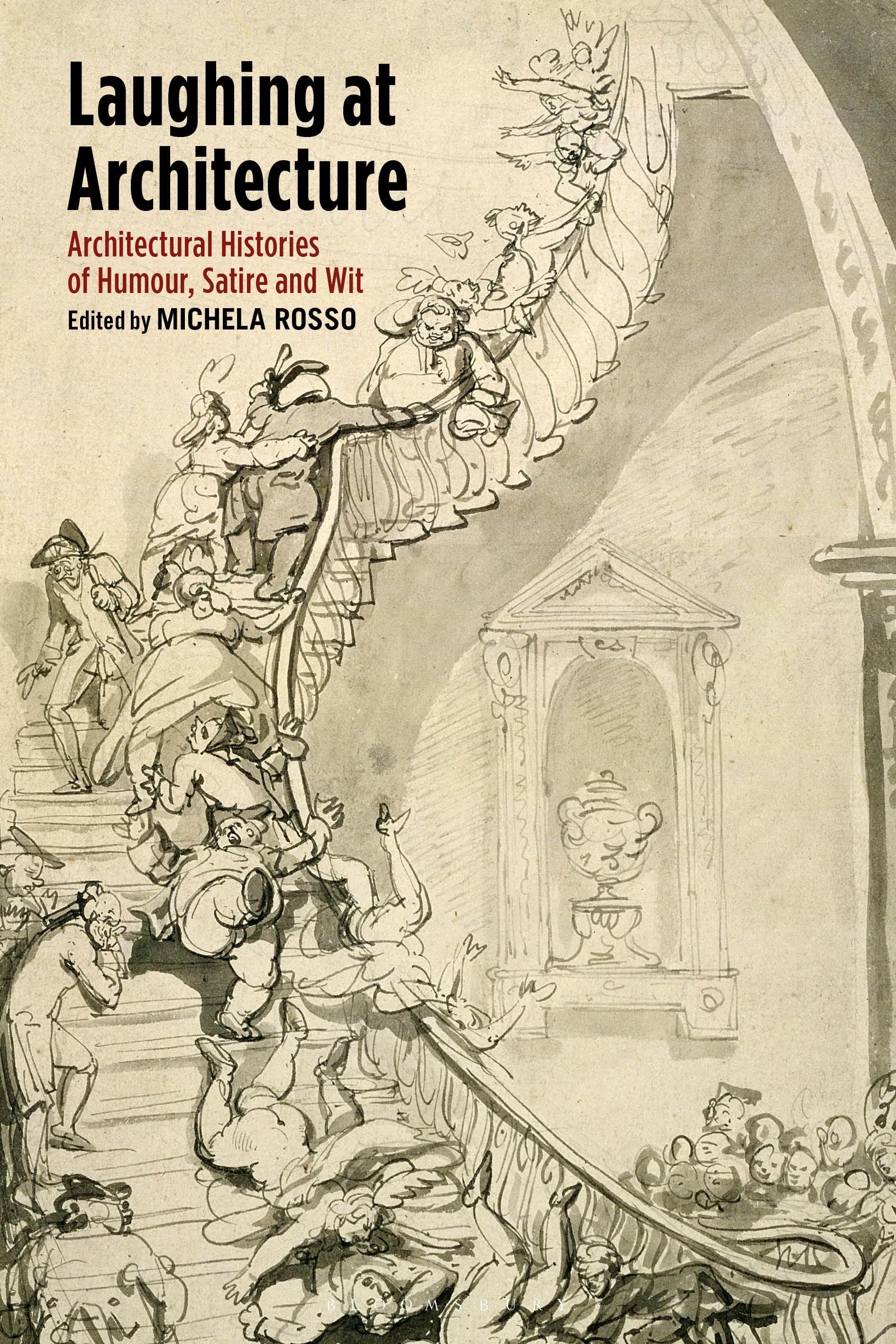
In a media-saturated world, humour stands out as a form of social communication that is especially effective in re-appropriating and questioning architectural and urban culture. Whether illuminating the ambivalences of metropolitan life or exposing the shock of modernisation, cartoons, caricature, and parody have long been potent agents of architectural criticism, protest and opposition.
In a novel contribution to the field of architectural history, this book outlines a survey of visual and textual humour as applied to architecture, its artefacts and leading professionals. Employing a wide variety of visual and literary sources (prints, the illustrated press, advertisements, theatrical representations, cinema and TV), thirteen essays explore an array of historical subjects concerning the critical reception of projects, buildings and cities through the means of caricature and parody. Subjects range from 1750 to the present, and from Europe and the USA to contemporary China. From William Hogarth and George Cruikshank to Osbert Lancaster, Adolf Loos' satire, and Saul Steinberg's celebrated cartoons of New York City, graphic and descriptive humour is shown to be an enormously fruitful, yet largely unexplored terrain of investigation for the architectural and urban historian.
In a novel contribution to the field of architectural history, this book outlines a survey of visual and textual humour as applied to architecture, its artefacts and leading professionals. Employing a wide variety of visual and literary sources (prints, the illustrated press, advertisements, theatrical representations, cinema and TV), thirteen essays explore an array of historical subjects concerning the critical reception of projects, buildings and cities through the means of caricature and parody. Subjects range from 1750 to the present, and from Europe and the USA to contemporary China. From William Hogarth and George Cruikshank to Osbert Lancaster, Adolf Loos' satire, and Saul Steinberg's celebrated cartoons of New York City, graphic and descriptive humour is shown to be an enormously fruitful, yet largely unexplored terrain of investigation for the architectural and urban historian.
Seiten: 288
Kategorie: Arkitektur & Stadsplanering
e-ISBN: 9781350022768
Versandgewicht: 1.2 kg
Versand in: 1-2 Tage
Zahle einfach mit Karte, Klarna, Apple Pay oder Google Pay. Nicht zufrieden? Du hast immer ein 14-tägiges Widerrufsrecht. Lies mehr in unseren AGB. Hast du Fragen, schreib uns eine E-Mail an hello@memmo.org.
Memmo macht das Lernen einfacher – wo auch immer du bist. Bei uns findest du deine Kursbücher und smarte Lerntools an einem Ort: Zusammenfassungen, Quizzes, Podcasts und Lernkarten. Und Ted, dein Lernbuddy, beantwortet alles, was du wissen möchtest. Über 50.000 Studierende lernen bereits hier – gemacht, damit du schneller lernst und weniger Stress hast.