
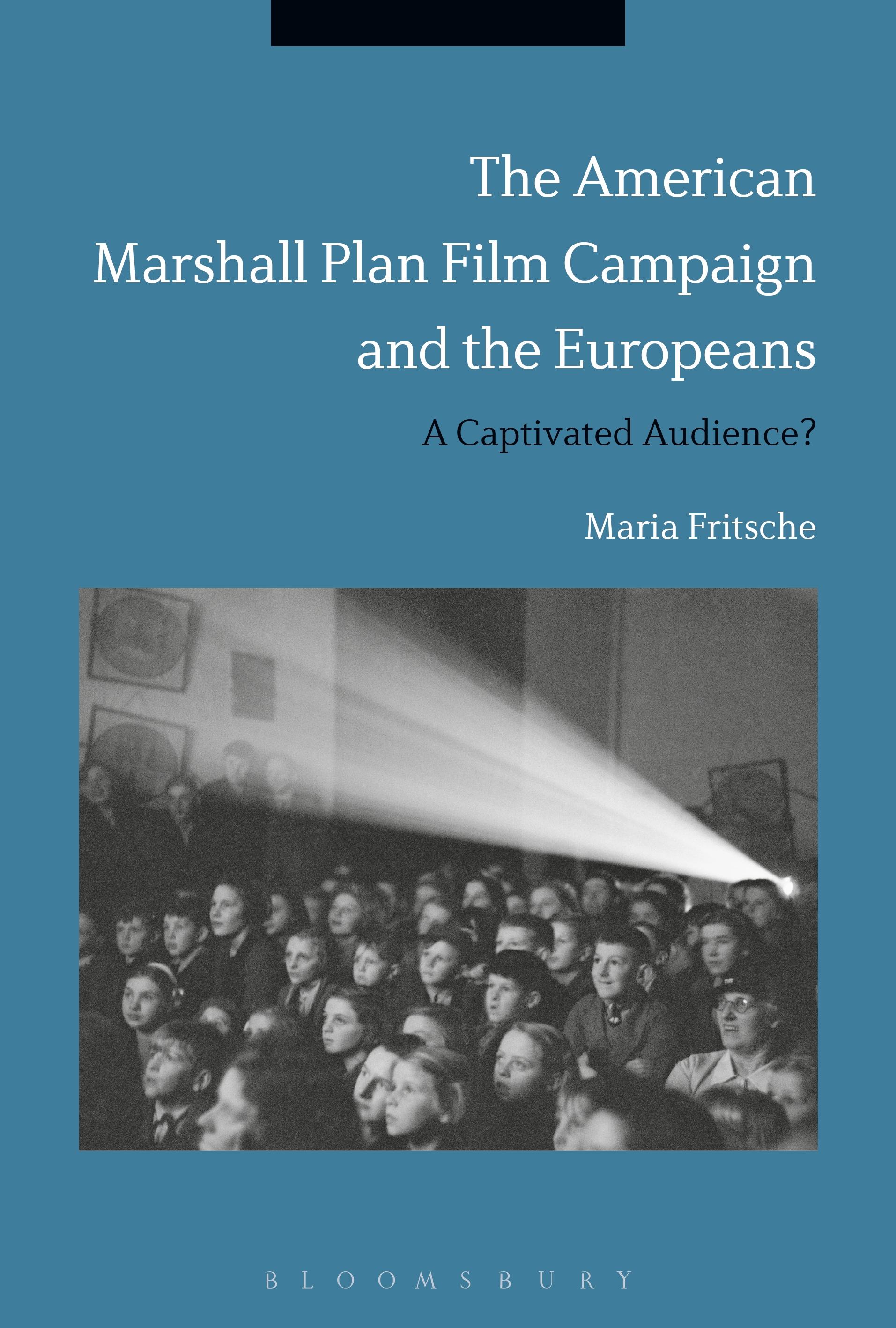
The US government launched the European Recovery Programme, otherwise known as the 'Marshall Plan', in order to save war-torn Europe from collapse in 1948. Yet while much is known about the economic side of the Marshall Plan, the extensive film campaign that accompanied it has been largely overlooked until now.
The American Marshall Plan Film Campaign and the Europeans is the first book to explore the use of the Marshall Plan films and, importantly, their distribution and reception across Europe. The study examines every available film – the 170 that remain from the 200 estimated to have been made – and looks at how they were designed to instil hope, argue the case for economic restructuring and persuade the Europeans of the superiority of the liberal-capitalist system. The book goes on to reason that the films served as a powerful weapon in the cultural Cold War, but that the European audiences were by no means passive victims of the US propaganda effort.
Maria Fritsche discusses the Marshall Plan films in the context of countries across Western, Northern and Southern Europe, covering the majority of the 17 European countries that participated in the Plan in the process. The book incorporates 70 images and utilises a vast number of archival sources to explore the strategies the US adopted to sway the minds of the Europeans, the problems they encountered in the process and, not least, the varied responses of the European audiences.
It is a vital study for any scholar or student keen to know more about postwar recovery in Europe, the legacy of the Second World War or America's relationship with Europe in the 20th century.
The American Marshall Plan Film Campaign and the Europeans is the first book to explore the use of the Marshall Plan films and, importantly, their distribution and reception across Europe. The study examines every available film – the 170 that remain from the 200 estimated to have been made – and looks at how they were designed to instil hope, argue the case for economic restructuring and persuade the Europeans of the superiority of the liberal-capitalist system. The book goes on to reason that the films served as a powerful weapon in the cultural Cold War, but that the European audiences were by no means passive victims of the US propaganda effort.
Maria Fritsche discusses the Marshall Plan films in the context of countries across Western, Northern and Southern Europe, covering the majority of the 17 European countries that participated in the Plan in the process. The book incorporates 70 images and utilises a vast number of archival sources to explore the strategies the US adopted to sway the minds of the Europeans, the problems they encountered in the process and, not least, the varied responses of the European audiences.
It is a vital study for any scholar or student keen to know more about postwar recovery in Europe, the legacy of the Second World War or America's relationship with Europe in the 20th century.
Seiten: 360
Kategorie: Film- & Medievetenskap
e-ISBN: 9781350009356
Versandgewicht: 1.2 kg
Versand in: 1-2 Tage
Zahle einfach mit Karte, Klarna, Apple Pay oder Google Pay. Nicht zufrieden? Du hast immer ein 14-tägiges Widerrufsrecht. Lies mehr in unseren AGB. Hast du Fragen, schreib uns eine E-Mail an hello@memmo.org.
Memmo macht das Lernen einfacher – wo auch immer du bist. Bei uns findest du deine Kursbücher und smarte Lerntools an einem Ort: Zusammenfassungen, Quizzes, Podcasts und Lernkarten. Und Ted, dein Lernbuddy, beantwortet alles, was du wissen möchtest. Über 50.000 Studierende lernen bereits hier – gemacht, damit du schneller lernst und weniger Stress hast.