
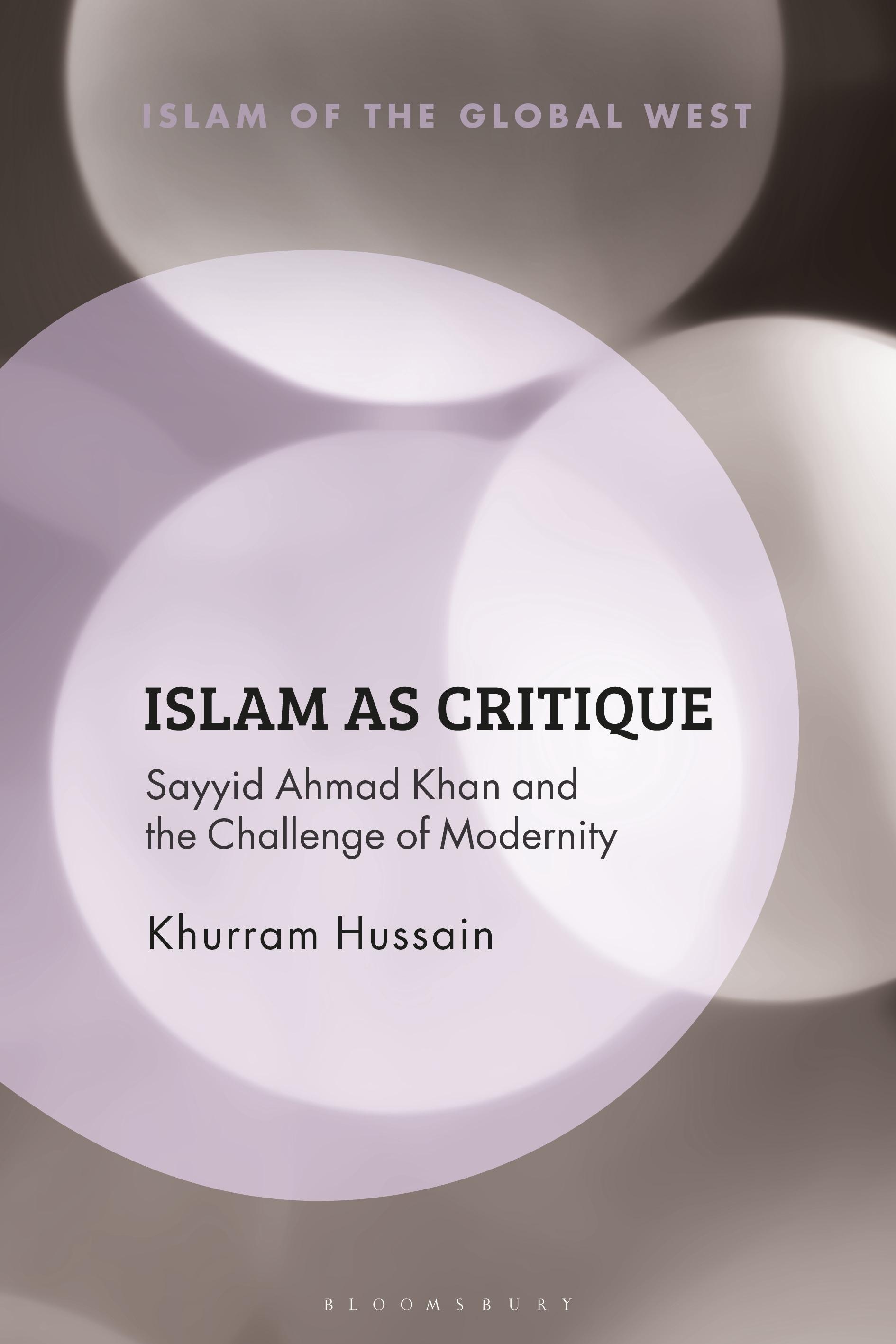
What would it mean to imagine Islam as an immanent critique of the West?
Sayyid Ahmad Khan lived in a time of great tribulation for Muslim India under British rule. By examining Khan's work as a critical expression of modernity rooted in the Muslim experience of it, Islam as Critique argues that Khan is essential to understanding the problematics of modern Islam and its relationship to the West.
The book re-imagines Islam as an interpretive strategy for investigating the modern condition, and as an engaged alternative to mainstream Western thought. Using the life and work of nineteenth-century Indian Muslim polymath Khan (1817-1898), it identifies Muslims as a viable resource for both critical intervention in important ethical debates of our times and as legitimate participants in humanistic discourses that underpin a just global order.
Islam as Critique locates Khan within a broader strain in modern Islamic thought that is neither a rejection of the West, nor a wholesale acceptance of it. The author calls this “Critical Islam”. By bringing Khan's critical engagement with modernity into conversation with similar critical analyses of the modern by Reinhold Niebuhr, Hannah Arendt, and Alasdair MacIntyre, the author shows how Islam can be read as critique.
Sayyid Ahmad Khan lived in a time of great tribulation for Muslim India under British rule. By examining Khan's work as a critical expression of modernity rooted in the Muslim experience of it, Islam as Critique argues that Khan is essential to understanding the problematics of modern Islam and its relationship to the West.
The book re-imagines Islam as an interpretive strategy for investigating the modern condition, and as an engaged alternative to mainstream Western thought. Using the life and work of nineteenth-century Indian Muslim polymath Khan (1817-1898), it identifies Muslims as a viable resource for both critical intervention in important ethical debates of our times and as legitimate participants in humanistic discourses that underpin a just global order.
Islam as Critique locates Khan within a broader strain in modern Islamic thought that is neither a rejection of the West, nor a wholesale acceptance of it. The author calls this “Critical Islam”. By bringing Khan's critical engagement with modernity into conversation with similar critical analyses of the modern by Reinhold Niebuhr, Hannah Arendt, and Alasdair MacIntyre, the author shows how Islam can be read as critique.
Seiten: 232
Kategorie: Religion & Teologi
e-ISBN: 9781350006348
Versandgewicht: 1.2 kg
Versand in: 1-2 Tage
Zahle einfach mit Karte, Klarna, Apple Pay oder Google Pay. Nicht zufrieden? Du hast immer ein 14-tägiges Widerrufsrecht. Lies mehr in unseren AGB. Hast du Fragen, schreib uns eine E-Mail an hello@memmo.org.
Memmo macht das Lernen einfacher – wo auch immer du bist. Bei uns findest du deine Kursbücher und smarte Lerntools an einem Ort: Zusammenfassungen, Quizzes, Podcasts und Lernkarten. Und Ted, dein Lernbuddy, beantwortet alles, was du wissen möchtest. Über 50.000 Studierende lernen bereits hier – gemacht, damit du schneller lernst und weniger Stress hast.