
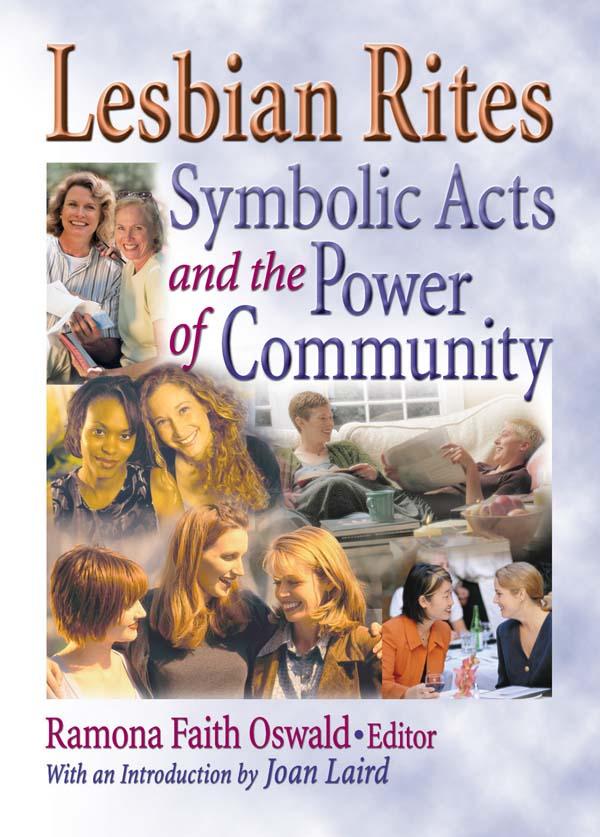
Explore affirmation and coping rituals for lesbian singles, couples, and communities!
This pioneering book is a multidisciplinary compilation of scholarship addressing lesbians, the rituals in their lives, and the meaning and impact of those rituals for the women involved and the people and communities around them. It offers a diverse range of perspectives on what it means to be a lesbian, what ritual is, what it means to enact a ritual, and how we can understand lesbian ritual experiences.
Lesbian Rites: Symbolic Acts and the Power of Community presents five explorations of ritual that bring forth themes of lesbian-centered social change.
- In Death's Midwife, Sharon Jaffe creates a narrative that illustrates the power of ritual to reconcile straight and gay, Christian and Pagan, in end-of-life situations.
- Next, Ruth Barrett's exploration of Dianic traditions provides a brief history of the importance of Goddess-worship to radical lesbian feminists, and uses those traditions to create life-course rituals.
- Marla Brettschneider's Ritual Encounters of the Queer Kind challenges notions of a static lesbian self and instead reworks Judaism and anarchist politics to propose rituals of continuous becoming.
- Krista McQueeney then analyzes the paradoxes of a lesbian commitment ceremony held within a gay-affirmative African-American congregation in the southern United States.
- Elizabeth Suter and editor Ramona Faith Oswald use exploratory survey data to examine how lesbian couples may use name changing as a strategy to claim family status.
In addition, Lesbian Rites also includes two chapters that examine how lesbians have been compromised, if not harmed, by the ritualization of heterosexism and homophobia. The first is an insightful analysis of the community response to the feminist retreat known as Camp Sister Spirit. In this chapter, Kate Greene uses Mary Daly's seven patterns of sado-ritual syndrome to show how the people opposed to the camp were organized to uphold heterosexual patriarchy through an obsession with purity that defined the camp as a refuge for immorality. The second chapter on this subject reviews the editor's own experiences of being hidden and devalued at heterosexual family weddings.
Zahle einfach mit Karte, Klarna, Apple Pay oder Google Pay. Nicht zufrieden? Du hast immer ein 14-tägiges Widerrufsrecht. Lies mehr in unseren AGB. Hast du Fragen, schreib uns eine E-Mail an hello@memmo.org.
Memmo macht das Lernen einfacher – wo auch immer du bist. Bei uns findest du deine Kursbücher und smarte Lerntools an einem Ort: Zusammenfassungen, Quizzes, Podcasts und Lernkarten. Und Ted, dein Lernbuddy, beantwortet alles, was du wissen möchtest. Über 50.000 Studierende lernen bereits hier – gemacht, damit du schneller lernst und weniger Stress hast.