
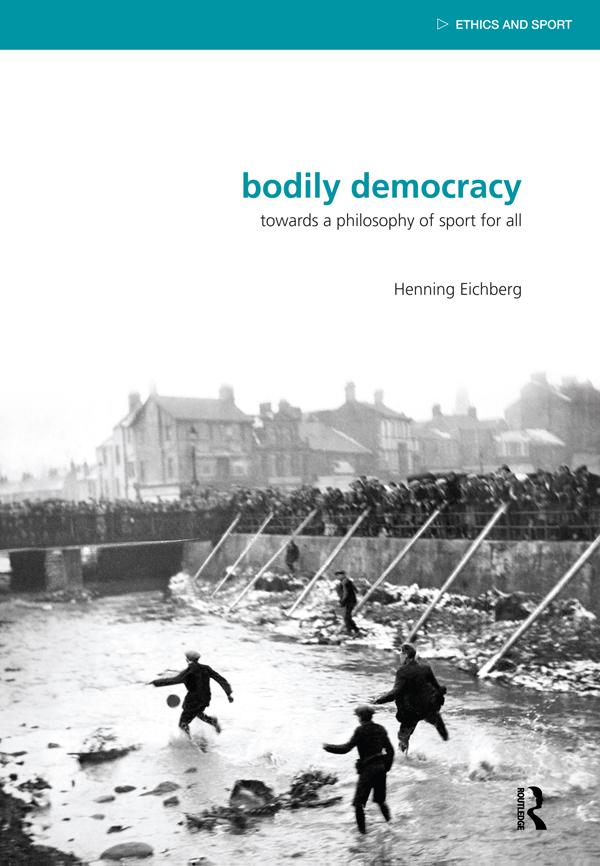
Sport has gained increasing importance for welfare society. In this process, however, the term of ‘sport’ has become less and less clear. Larger parts of what nowadays is called ‘sport for all’ are non-competitive and derived from traditions of gymnastics, dance, festivity, games, outdoor activities, and physical training rather than from classical modern elite sports. This requires new philosophical approaches, as the philosophy of sport, so far, has been dominated by topics of elite sports.
Based on Scandinavian experiences, the book presents studies about festivities of sport, outdoor activities, song and movement, and play and game. The engagement of elderly people challenges sports. Games get political significance in international cooperation, for peace culture and as means against poverty (in Africa). The empirical studies result in philosophical analyses on the recognition of folk practice in education and on relations between identity and recognition.
The study of ‘sport for all’ opens up for new ways of phenomenological knowledge, moving bottom-up from sport to the philosophy of "the individual", of event, of nature, and of human energy. Popular sports give inspiration to a philosophy of practice as well as to a phenomenological understanding of ‘the people’, of civil society and the ‘demos’ of democracy – as folk in movement.
This book was published as a special issue in Sport, Ethics and Philosophy.
Zahle einfach mit Karte, Klarna, Apple Pay oder Google Pay. Nicht zufrieden? Du hast immer ein 14-tägiges Widerrufsrecht. Lies mehr in unseren AGB. Hast du Fragen, schreib uns eine E-Mail an hello@memmo.org.
Memmo macht das Lernen einfacher – wo auch immer du bist. Bei uns findest du deine Kursbücher und smarte Lerntools an einem Ort: Zusammenfassungen, Quizzes, Podcasts und Lernkarten. Und Ted, dein Lernbuddy, beantwortet alles, was du wissen möchtest. Über 50.000 Studierende lernen bereits hier – gemacht, damit du schneller lernst und weniger Stress hast.