
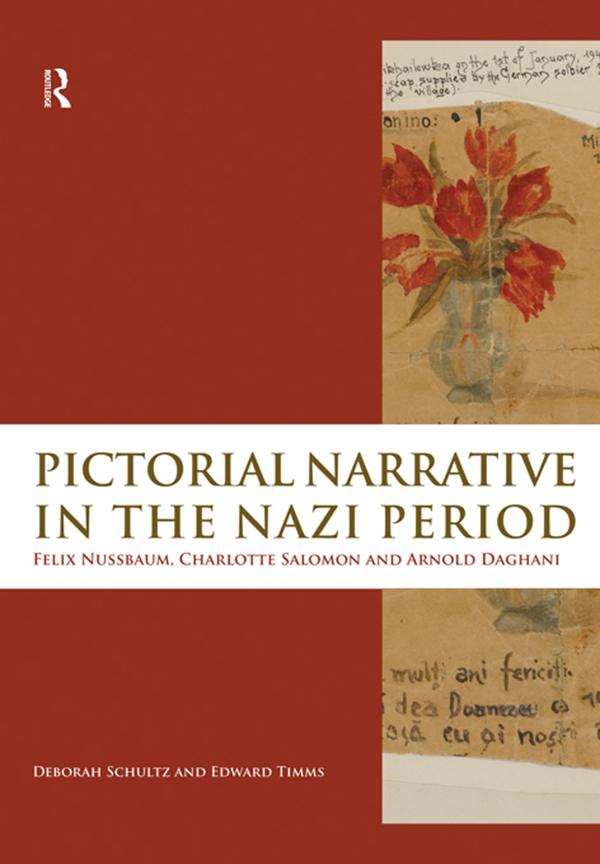
This book investigates creative responses to the Nazi period in the work of three artists, Felix Nussbaum, Charlotte Salomon and Arnold Daghani, focusing on their use of pictorial narrative. It analyses their contrasting aesthetic strategies and their innovative forms of artistic production. In contrast with the autonomous, modernist art object, their works were explicitly linked with the historical conditions under which they were produced – the pressures of persecution and exile. Conditions in the slave labour camps and ghettos in the Ukraine, which shaped the paintings and drawings of Daghani, are contrasted with the experiences of exile in Belgium and France, which inspired Nussbaum and Salomon. In defiance of conventional artistic practice, they produced word-image combinations that can be read as narrative sequences, incorporating specific references to political events. While there has been a wealth of literary, philosophical and historical studies relating to the Holocaust, aesthetic debate has developed less extensively. This is the first comparative study of three artists who are only belatedly achieving recognition and the recent reception of their work is evaluated. By identifying the aesthetic principles and narrative strategies underlying their work, the book reassesses their achievement in creating new forms of modernism with an unmistakable political momentum.
This book was published as a special issue of Word & Image.
Zahle einfach mit Karte, Klarna, Apple Pay oder Google Pay. Nicht zufrieden? Du hast immer ein 14-tägiges Widerrufsrecht. Lies mehr in unseren AGB. Hast du Fragen, schreib uns eine E-Mail an hello@memmo.org.
Memmo macht das Lernen einfacher – wo auch immer du bist. Bei uns findest du deine Kursbücher und smarte Lerntools an einem Ort: Zusammenfassungen, Quizzes, Podcasts und Lernkarten. Und Ted, dein Lernbuddy, beantwortet alles, was du wissen möchtest. Über 50.000 Studierende lernen bereits hier – gemacht, damit du schneller lernst und weniger Stress hast.