
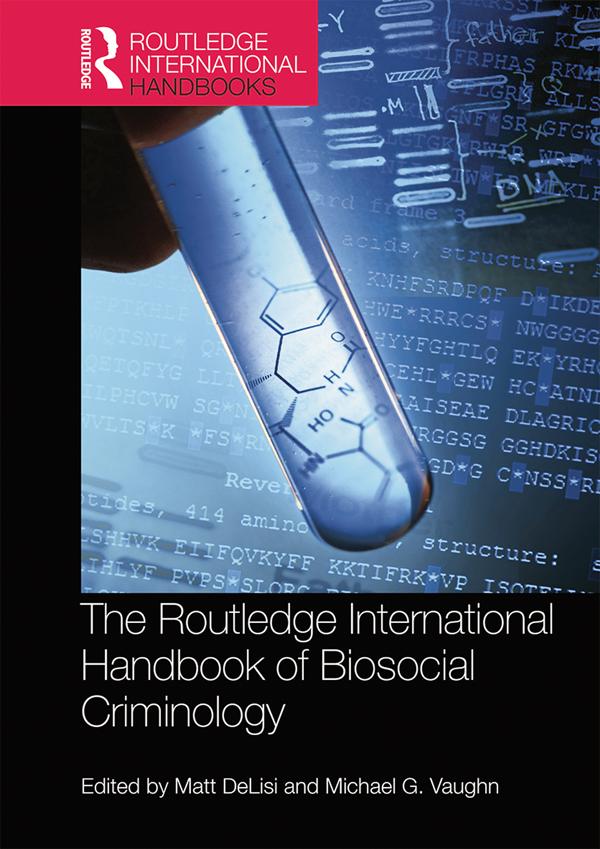
Biosocial criminology is an interdisciplinary field that aims to explain crime and antisocial behavior by exploring both biological factors and environmental factors. Since the mapping of the human genome, scientists have been able to study the biosocial causes of human behaviour with the greatest specificity.
After decades of almost exclusive sociological focus, criminology has undergone a paradigm shift where the field is more interdisciplinary and this book combines perspectives from criminology and sociology with contributions from fields such as genetics, neuropsychology, and evolutionary psychology. The Routledge International Handbook of Biosocial Criminology is the largest and most comprehensive work of its kind, and is organized into five sections that collectively span the terrain of biosocial research on antisocial behavior.
Bringing together leading experts from around the world, this book considers the criminological, genetic and neuropsychological foundations of offending, as well as the legal and criminal justice applications of biosocial criminological theory. The handbook is essential reading for students, researchers, and practitioners from across the social, behavioural, and natural sciences who are engaged in the study of antisocial behaviour.
Zahle einfach mit Karte, Klarna, Apple Pay oder Google Pay. Nicht zufrieden? Du hast immer ein 14-tägiges Widerrufsrecht. Lies mehr in unseren AGB. Hast du Fragen, schreib uns eine E-Mail an hello@memmo.org.
Memmo macht das Lernen einfacher – wo auch immer du bist. Bei uns findest du deine Kursbücher und smarte Lerntools an einem Ort: Zusammenfassungen, Quizzes, Podcasts und Lernkarten. Und Ted, dein Lernbuddy, beantwortet alles, was du wissen möchtest. Über 50.000 Studierende lernen bereits hier – gemacht, damit du schneller lernst und weniger Stress hast.