
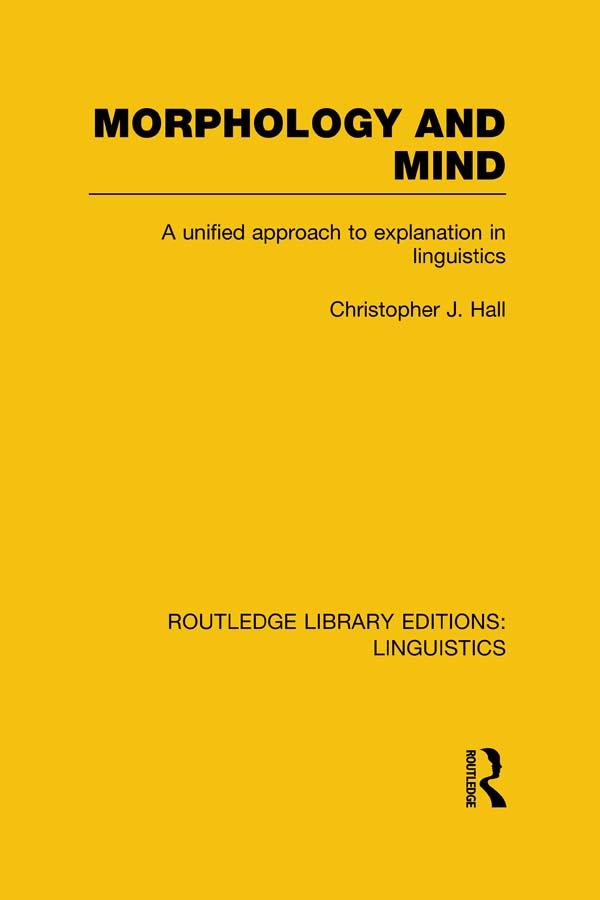
The central concern of this book is the explanation of linguistic form. It examines in detail certain cross-linguistic patterns in morphological systems, providing unified explanations of the observation that suffixes predominate over prefixes and the correlation between affix position and syntactic head position. The explanation of the suffixing preference is one which appeals to principles of language processing, tempered by cognitive constraints underlying language change. These factors, coupled with generative morphological analysis, also provide an explanation for the head/affix correlation.
The extended case-study illustrates a unified, integrative approach to explanation in linguistics which stresses two major features: the search for cognitive or other functional principles that could potentially underlie formally specified regularities; and the need for a micro-analysis of the mechanisms of ‘linkage’ between regularity and explanation. The natural methodological consequence of such an approach is a move towards greater cooperation between the various subdisciplines of linguistics, as well as a greatly needed expansion of cross-disciplinary research. The author’s broad training in theoretical morphology, formal and typological universals, and language processing, allows him to cross traditional boundaries and view the complex interactions between theoretical linguistic principles and cognitive mechanisms with considerable clarity of vision.
Zahle einfach mit Karte, Klarna, Apple Pay oder Google Pay. Nicht zufrieden? Du hast immer ein 14-tägiges Widerrufsrecht. Lies mehr in unseren AGB. Hast du Fragen, schreib uns eine E-Mail an hello@memmo.org.
Memmo macht das Lernen einfacher – wo auch immer du bist. Bei uns findest du deine Kursbücher und smarte Lerntools an einem Ort: Zusammenfassungen, Quizzes, Podcasts und Lernkarten. Und Ted, dein Lernbuddy, beantwortet alles, was du wissen möchtest. Über 50.000 Studierende lernen bereits hier – gemacht, damit du schneller lernst und weniger Stress hast.