
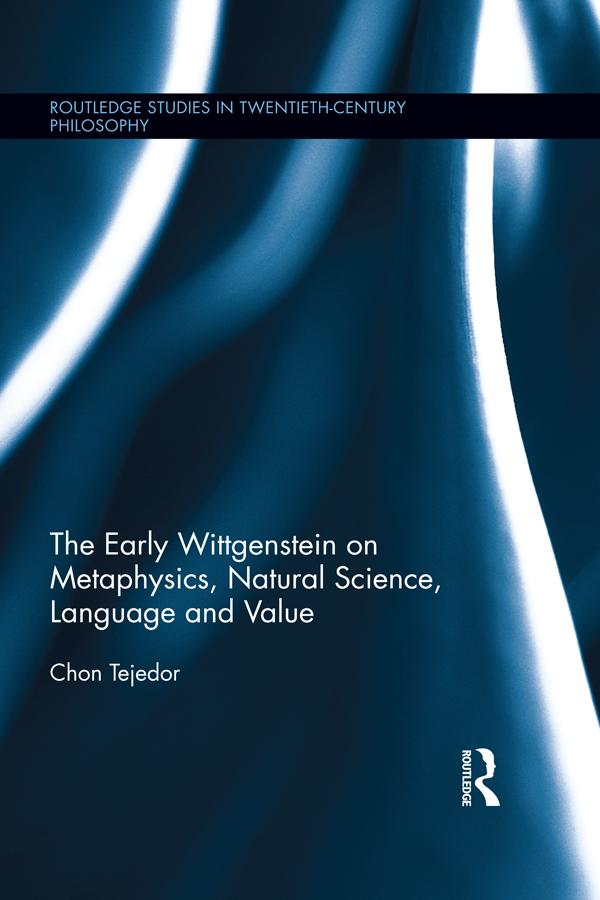
This book advances a reading of Wittgenstein’s Tractatus that moves beyond the main interpretative options of the New Wittgenstein debate. It covers Wittgenstein’s approach to language and logic, as well as other areas unduly neglected in the literature, such as his treatment of metaphysics, the natural sciences and value. Tejedor re-contextualises Wittgenstein’s thinking in these areas, plotting its evolution in his diaries, correspondence and pre-Tractatus texts, and developing a fuller picture of its intellectual background. This broadening of the angle of view is central to the interpretative strategy of her book: only by looking at the Tractatus in this richer light can we address the fundamental questions posed by the New Wittgenstein debate – questions concerning the method of the Tractatus, its approach to nonsense and the continuity in Wittgenstein’s philosophy. Wittgenstein’s early work remains insightful, thought-inspiring and relevant to contemporary philosophy of language and science, metaphysics and ethics. Tejedor’s ground-breaking work ultimately conveys a surprisingly positive message concerning the power for ethical transformation that philosophy can have, when it is understood as an activity aimed at increasing conceptual clarification and awareness.
Zahle einfach mit Karte, Klarna, Apple Pay oder Google Pay. Nicht zufrieden? Du hast immer ein 14-tägiges Widerrufsrecht. Lies mehr in unseren AGB. Hast du Fragen, schreib uns eine E-Mail an hello@memmo.org.
Memmo macht das Lernen einfacher – wo auch immer du bist. Bei uns findest du deine Kursbücher und smarte Lerntools an einem Ort: Zusammenfassungen, Quizzes, Podcasts und Lernkarten. Und Ted, dein Lernbuddy, beantwortet alles, was du wissen möchtest. Über 50.000 Studierende lernen bereits hier – gemacht, damit du schneller lernst und weniger Stress hast.