
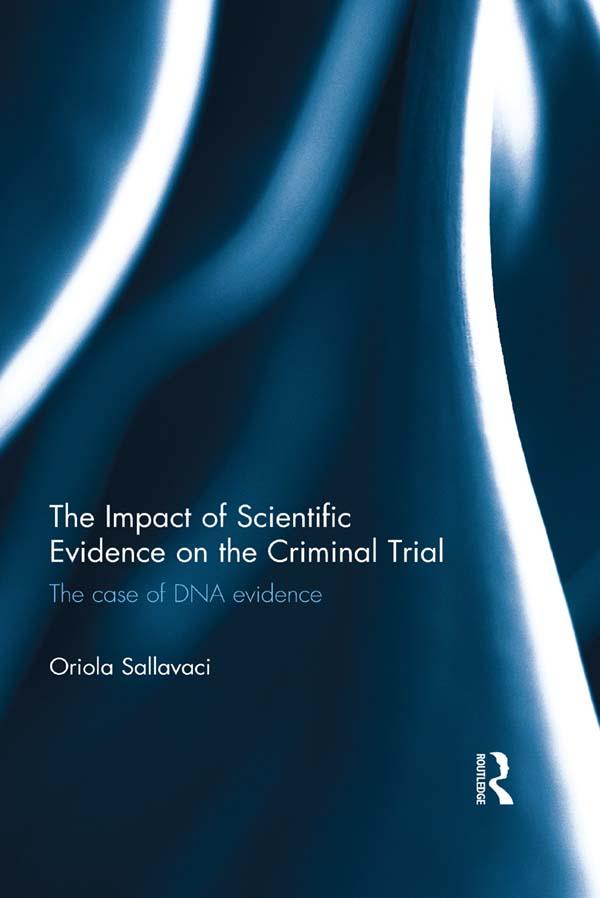
This book explores challenges posed by the use of DNA evidence to the traditional features, procedures and principles of the criminal trial. It examines the limitations of existing theories of criminal trial processes in the face of increasing use of scientific evidence in the court room. The research elucidates the interconnections at trial of three epistemologies, namely legal reasoning, as represented by counsel and trial judge, common sense manifested by the jury and scientific reasoning expounded by the expert witness. Sallavaci argues that while scientific reasoning is part of this hybrid of trial languages and practices, its extended use is producing specifically novel tensions which impact on the traditional criminal trial landscape.
Through the lens of DNA evidence, the book investigates how far the use of scientific evidence in the fact finding process poses challenges for the adversarial character of the proceedings and rules of evidence; how it affects the role of the judge, jury and expert witness, as well as the principle of orality and continuity of the trial. In comparing the challenges faced in English common law trials to those of the USA, this book has international scope, and will be of great use and interest to students and researchers of Criminal Law and Practice, Policing, and the role of Forensics in Law.
Zahle einfach mit Karte, Klarna, Apple Pay oder Google Pay. Nicht zufrieden? Du hast immer ein 14-tägiges Widerrufsrecht. Lies mehr in unseren AGB. Hast du Fragen, schreib uns eine E-Mail an hello@memmo.org.
Memmo macht das Lernen einfacher – wo auch immer du bist. Bei uns findest du deine Kursbücher und smarte Lerntools an einem Ort: Zusammenfassungen, Quizzes, Podcasts und Lernkarten. Und Ted, dein Lernbuddy, beantwortet alles, was du wissen möchtest. Über 50.000 Studierende lernen bereits hier – gemacht, damit du schneller lernst und weniger Stress hast.