
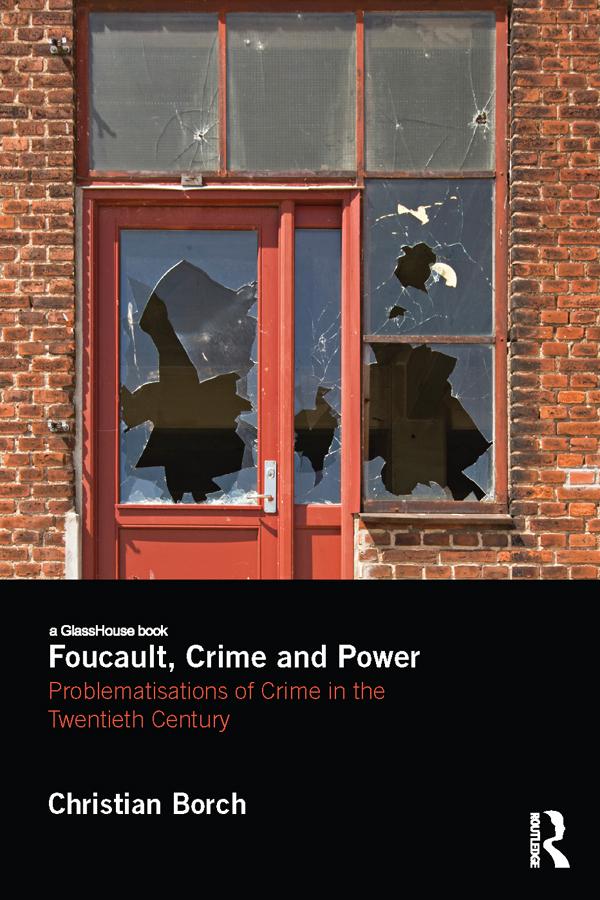
This book presents a Foucauldian problematisation analysis of crime, with a particular focus on the twentieth century. It considers how crime has been conceived as problem and, by scrutinising the responses that have been adapted to deal with crime, demonstrates how a range of power modalities have evolved throughout the twentieth century.
Christian Borch shows how the tendency of criminologists to focus on either disciplinary power or governmentality has neglected the broader complex of Foucault’s concerns: ignoring its historical underpinnings, whilst for the most part limiting studies to only very recent developments, without giving sufficient attention to their historical backdrop. The book uses developments in Denmark – developments that can be readily identified in most other western countries – as a paradigmatic case for understanding how crime has been problematised in the West. Thus, Foucault, Crime and Power: Problematisations of Crime in the Twentieth Century demonstrates that a Foucauldian approach to crime holds greater analytical potentials for criminological research than have so far been recognized.
Zahle einfach mit Karte, Klarna, Apple Pay oder Google Pay. Nicht zufrieden? Du hast immer ein 14-tägiges Widerrufsrecht. Lies mehr in unseren AGB. Hast du Fragen, schreib uns eine E-Mail an hello@memmo.org.
Memmo macht das Lernen einfacher – wo auch immer du bist. Bei uns findest du deine Kursbücher und smarte Lerntools an einem Ort: Zusammenfassungen, Quizzes, Podcasts und Lernkarten. Und Ted, dein Lernbuddy, beantwortet alles, was du wissen möchtest. Über 50.000 Studierende lernen bereits hier – gemacht, damit du schneller lernst und weniger Stress hast.