
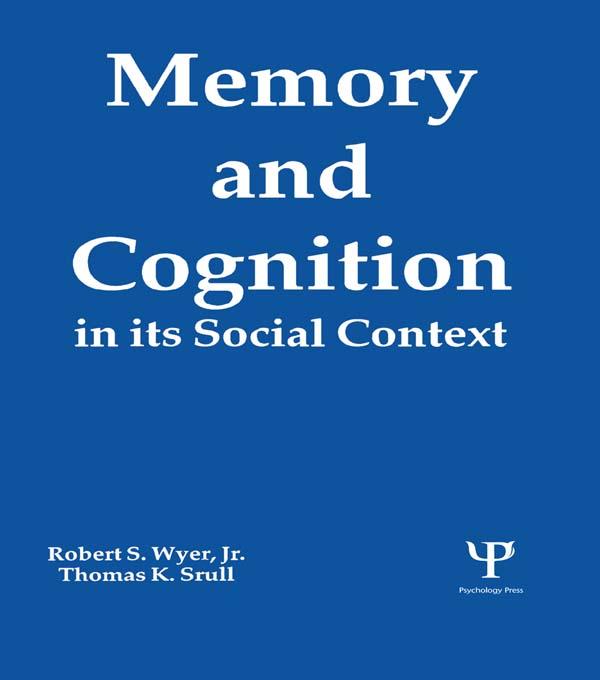
The first comprehensive theoretical formulation of the way people use information they receive about their social environments to make judgments and behavioral decisions, this volume focuses on the cognitive processes that underlie the use of social information. These include initial interpretation, the representations used to make inferences, and the transformation of these subjective inferences into overt judgment and behavior. In addition, it specifies the role of affect and emotion in information processing, and the role of self-knowledge at different stages of processing.
The theoretical model presented here is the first to provide a conceptual integration of existing theory and research in all phases of social information processing. It not only accounts for the major portion of existing research findings, but permits several hypotheses to be generated concerning phenomena that have not yet been empirically investigated. Although focused here on the processing of information about people and events, the formulation proposed has implications for other domains such as personnel appraisal, political decision making, and consumer behavior.
Zahle einfach mit Karte, Klarna, Apple Pay oder Google Pay. Nicht zufrieden? Du hast immer ein 14-tägiges Widerrufsrecht. Lies mehr in unseren AGB. Hast du Fragen, schreib uns eine E-Mail an hello@memmo.org.
Memmo macht das Lernen einfacher – wo auch immer du bist. Bei uns findest du deine Kursbücher und smarte Lerntools an einem Ort: Zusammenfassungen, Quizzes, Podcasts und Lernkarten. Und Ted, dein Lernbuddy, beantwortet alles, was du wissen möchtest. Über 50.000 Studierende lernen bereits hier – gemacht, damit du schneller lernst und weniger Stress hast.