
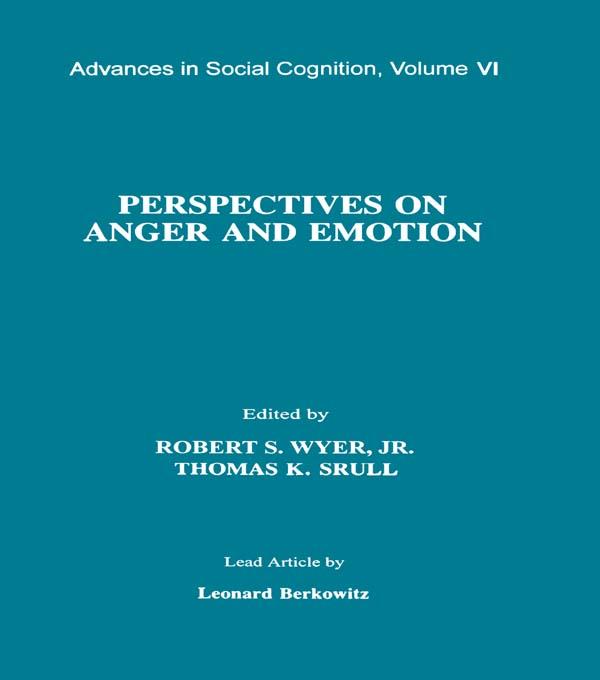
In this volume, Berkowitz develops the argument that experiential and behavioral components of an emotional state are affected by many processes: some are highly cognitive in nature; others are automatic and involuntary. Cognitive and associative mechanisms theoretically come into play at different times in the emotion-cognition sequence. The model he proposes, therefore, integrates theoretical positions that previously have been artificially segregated in much of the emotion-cognition literature.
The breadth of the implications of Berkowitz's theory is also reflected in the diversity of this book's companion chapters. Written by researchers whose work focuses on both social cognition and emotion, these articles provide important insights and possible extensions of the "cognitive-neoassociationistic" conceptualization developed in the target article. Although each chapter is a valuable contribution in its own right, this volume, taken as a whole, is a timely and important contribution both to social cognition and to research and theory on emotion per se.
Zahle einfach mit Karte, Klarna, Apple Pay oder Google Pay. Nicht zufrieden? Du hast immer ein 14-tägiges Widerrufsrecht. Lies mehr in unseren AGB. Hast du Fragen, schreib uns eine E-Mail an hello@memmo.org.
Memmo macht das Lernen einfacher – wo auch immer du bist. Bei uns findest du deine Kursbücher und smarte Lerntools an einem Ort: Zusammenfassungen, Quizzes, Podcasts und Lernkarten. Und Ted, dein Lernbuddy, beantwortet alles, was du wissen möchtest. Über 50.000 Studierende lernen bereits hier – gemacht, damit du schneller lernst und weniger Stress hast.