
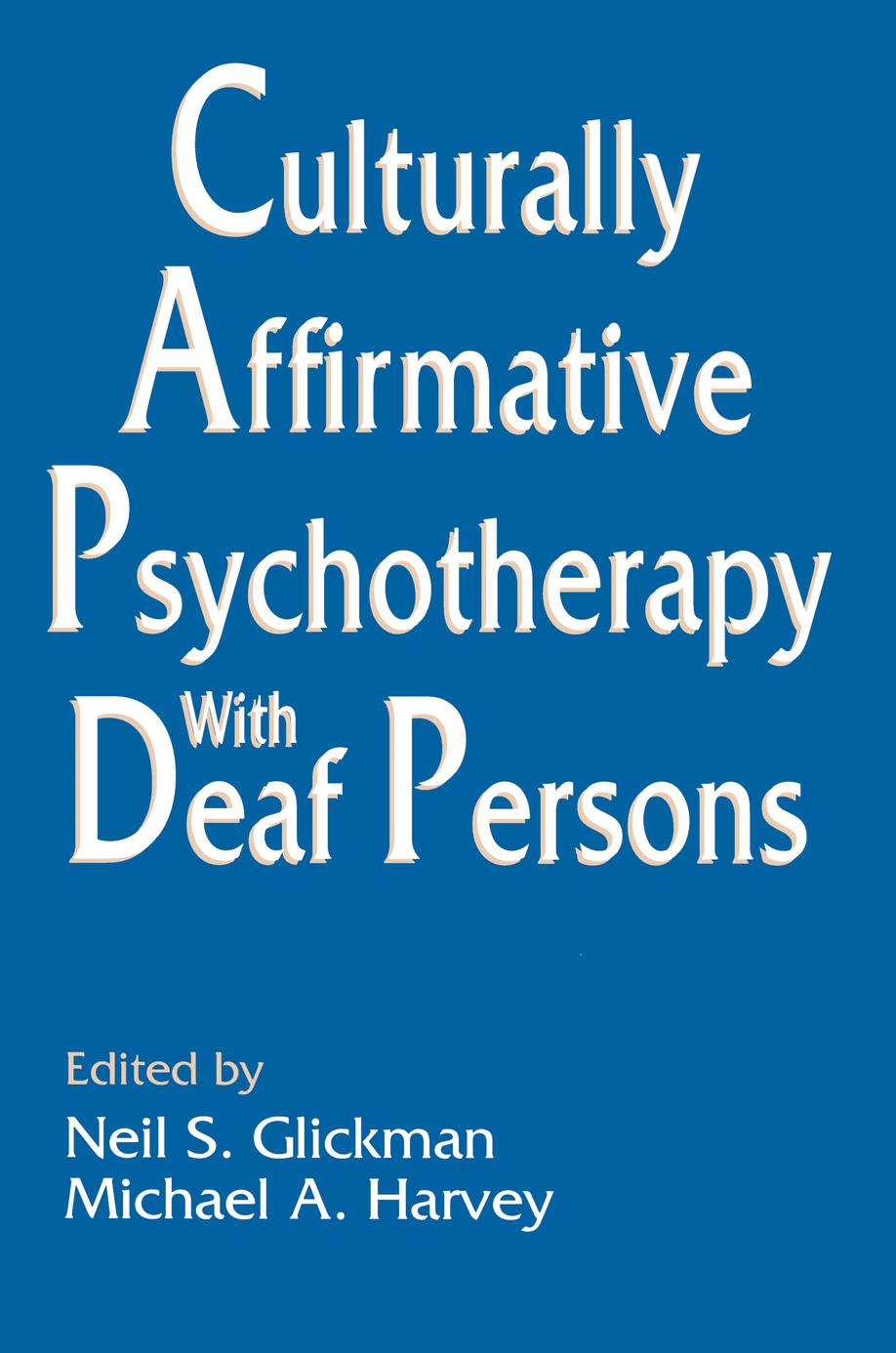
The impetus for this volume is the growing awareness within the mental health and larger community of a culturally affirmative model for understanding and assisting deaf people. In contrast to the "medical-pathological" model which treats deafness as a disability, the "cultural" model guides us to view deaf persons in relation to the deaf community--a group of people with a common language, culture, and collective identity. A primary tenant of culturally affirmative psychotherapy is to understand and respect such differences, not to eradicate them.
The contributors to this volume present a practical and realistic model of providing culturally affirmative counseling and psychotherapy for deaf people. The three dimensions of this model have been delineated by the multicultural counseling literature. These dimensions assert that culturally affirmative psychotherapy with deaf persons requires therapist self-awareness, knowledge of the deaf community/culture, and understanding of culturally-syntonic therapeutic interventions.
The first to exhaustively delineate the implications of the cultural model of deafness for counseling deaf people, this book is essential reading for anyone who works in an educational or counseling capacity with the deaf. This audience includes not only psychotherapists, but also vocational, guidance and residence counselors, teachers, independent living skills specialists, interpreters, and administrators of programs for the deaf.
Zahle einfach mit Karte, Klarna, Apple Pay oder Google Pay. Nicht zufrieden? Du hast immer ein 14-tägiges Widerrufsrecht. Lies mehr in unseren AGB. Hast du Fragen, schreib uns eine E-Mail an hello@memmo.org.
Memmo macht das Lernen einfacher – wo auch immer du bist. Bei uns findest du deine Kursbücher und smarte Lerntools an einem Ort: Zusammenfassungen, Quizzes, Podcasts und Lernkarten. Und Ted, dein Lernbuddy, beantwortet alles, was du wissen möchtest. Über 50.000 Studierende lernen bereits hier – gemacht, damit du schneller lernst und weniger Stress hast.