
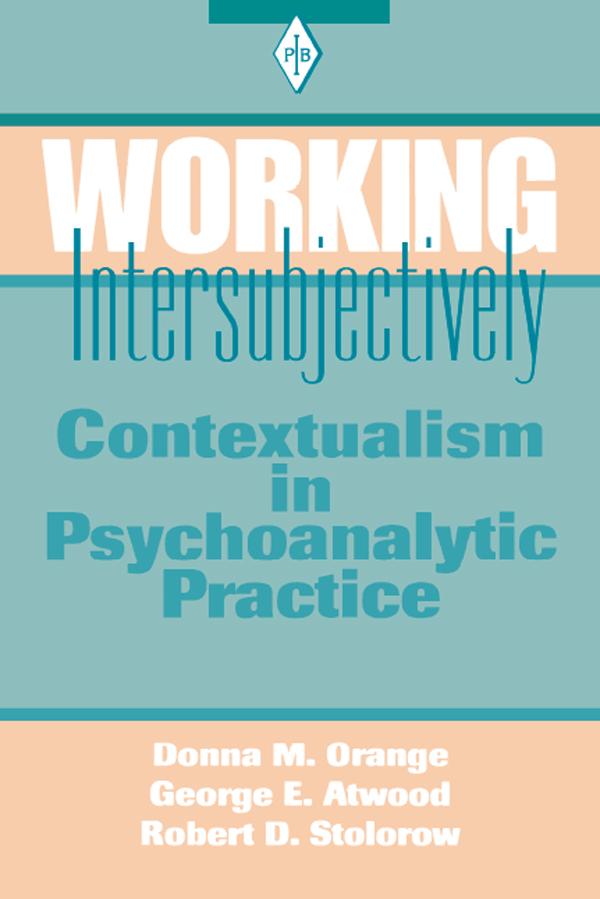
From an overview of the basic principles of intersubjectivity theory, Orange, Atwood, and Stolorow proceed to contextualist critiques of the concept of psychoanalytic technique and of the myth of analytic neutrality. They then examine the intersubjective contexts of extreme states of psychological disintegration, and conclude with an examination of what it means, philosophically and clinically, to think and work contextually.
This lucidly written and cogently argued work is the next step in the development of intersubjectivity theory. In particular, it is a clinically grounded continuation of Stolorow and Atwood's Contexts of Being (TAP, 1992), which reconceptualized four foundational pillars of psychoanalytic theory -- the unconscious, mind-body relations, trauma, and fantasy -- from an intersubjective perspective. Working Intersubjectively expounds and illustrates the contextualist sensibility that grows out of this reconceptualization. Like preceding volumes in the Psychoanalytic Inquiry Book Series by Robert Stolorow and his colleagues, it will be theoretically challenging and clinically useful to a wide readership of psychoanalysts and psychoanalytically informed psychotherapists.
Zahle einfach mit Karte, Klarna, Apple Pay oder Google Pay. Nicht zufrieden? Du hast immer ein 14-tägiges Widerrufsrecht. Lies mehr in unseren AGB. Hast du Fragen, schreib uns eine E-Mail an hello@memmo.org.
Memmo macht das Lernen einfacher – wo auch immer du bist. Bei uns findest du deine Kursbücher und smarte Lerntools an einem Ort: Zusammenfassungen, Quizzes, Podcasts und Lernkarten. Und Ted, dein Lernbuddy, beantwortet alles, was du wissen möchtest. Über 50.000 Studierende lernen bereits hier – gemacht, damit du schneller lernst und weniger Stress hast.