
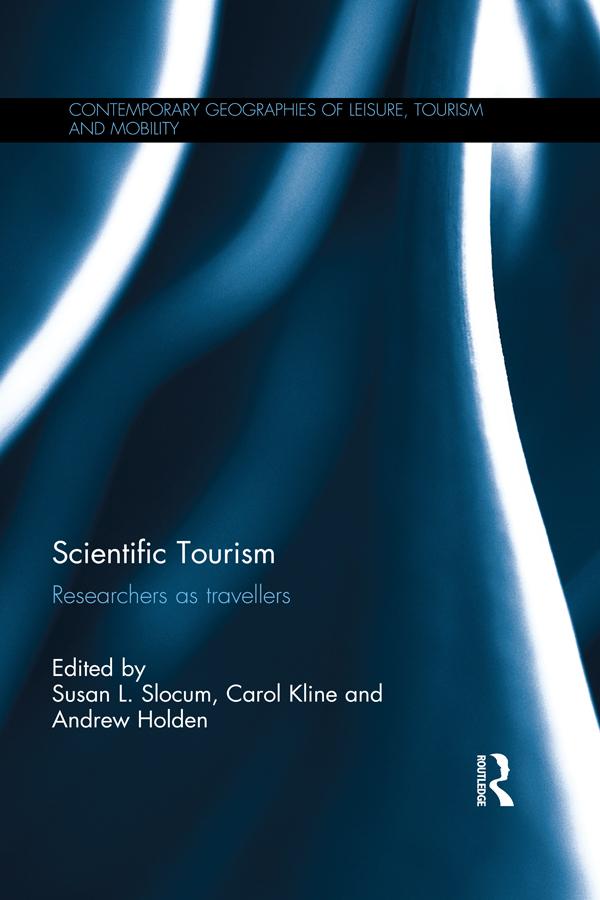
As researchers in emerging economies, scientists are often the first foreign visitors to stay in remote rural areas and, on occasion, form joint venture ecotourism and community tourism projects or poverty alleviation schemes between local agencies or NGOs, the local community, and their home institution or agency. They therefore can contribute to avenues for the conservation of natural resources and the development of rural communities as well as influencing the future tourism development through its perceived legitimacy and the destination image it promotes.
This book for the first time critically reviews tourism debates surrounding this emerging market of scientific and research oriented tourism. It is divided into three inter-related sections. Section 1 sets the stage of the discourse of scientific research in tourism; Section 2 evaluates the key players of scientific tourism looking particularly at the roles of NGOs, government agencies and university academic staff and Section 3 contains case studies documenting the niche of researchers as travelers in a range of geographical locations including Tanzania, Australia, Chile, Peru and Mexico. The title’s multidisciplinary approach provides an informed, interesting and stimulating addition to the existing limited literature and raises many issues and associated questions including the role of science tourism in tourism development and expansion, the impacts of scientific and research-based tourism, travel behaviors and motivations of researchers to name but a few.
This significant volume will provide the reader with a better understanding of scientists as travelers, their relationship to the tourism industry, and the role they play in community development around tourism sites. It will be valuable reading for students and academics across the fields of Tourism, Geography and Development Studies as well as other social science disciplines.
Zahle einfach mit Karte, Klarna, Apple Pay oder Google Pay. Nicht zufrieden? Du hast immer ein 14-tägiges Widerrufsrecht. Lies mehr in unseren AGB. Hast du Fragen, schreib uns eine E-Mail an hello@memmo.org.
Memmo macht das Lernen einfacher – wo auch immer du bist. Bei uns findest du deine Kursbücher und smarte Lerntools an einem Ort: Zusammenfassungen, Quizzes, Podcasts und Lernkarten. Und Ted, dein Lernbuddy, beantwortet alles, was du wissen möchtest. Über 50.000 Studierende lernen bereits hier – gemacht, damit du schneller lernst und weniger Stress hast.