
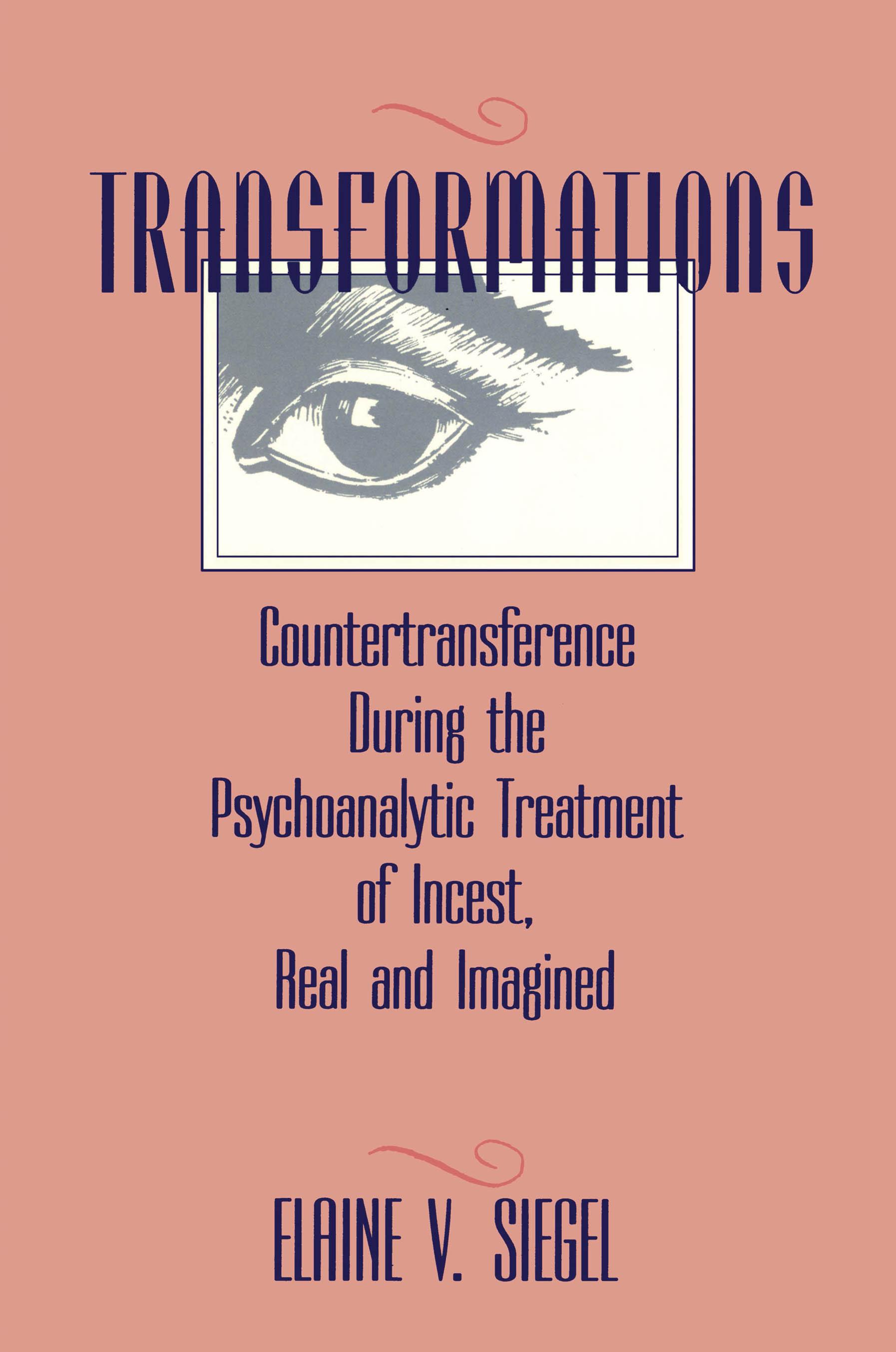
In recent years, memories and reconstructions of incestuous child abuse have become common features of psychoanalytic treatment. Among some clinicians, such abuse is suspected even when there is little evidence. How does the analyst distinguish between incest real and imagined, and how do recovered memories of incest affect the analyst?
In this poignant and beautifully written study, Elaine Siegel brings new insights to bear on these timely questions. An inveterate note taker, she discloses the countertransferential ruminations and associations to the occurrence of incest at various stages during the treatment process over the course of 30 years of clinical work. The manner in which her "analytic instrument" evolved and was shaped by her analysands' stories makes for a fascinating subtext in a book that addresses itself to the differences and similarities during treatment of real and imagined incestuous abuse.
Among the powrfully disturbing clinical cases at the heart of this study are two reports detailing the lengthy analyses of women who found corroboration for multigenerational incest. Siegel also presents two cases in which patients retracted their claims of incest toward the end of their treatments. Through the medium of these and other reports, Siegel explores how psychoanalysts are struggling both to understand incestuous abuse and to accomodate their treatment techniques to shifting societal perspectives.
Zahle einfach mit Karte, Klarna, Apple Pay oder Google Pay. Nicht zufrieden? Du hast immer ein 14-tägiges Widerrufsrecht. Lies mehr in unseren AGB. Hast du Fragen, schreib uns eine E-Mail an hello@memmo.org.
Memmo macht das Lernen einfacher – wo auch immer du bist. Bei uns findest du deine Kursbücher und smarte Lerntools an einem Ort: Zusammenfassungen, Quizzes, Podcasts und Lernkarten. Und Ted, dein Lernbuddy, beantwortet alles, was du wissen möchtest. Über 50.000 Studierende lernen bereits hier – gemacht, damit du schneller lernst und weniger Stress hast.