
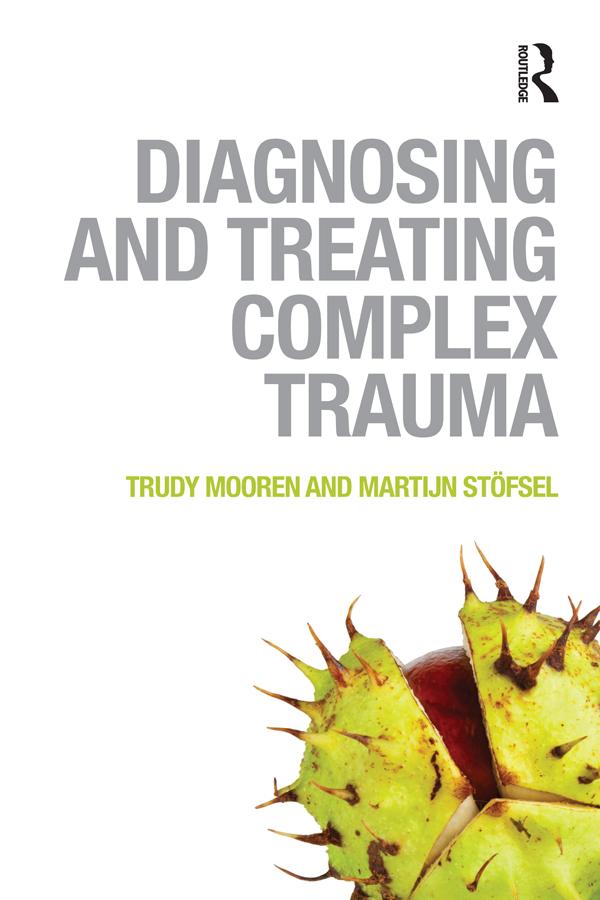
The term complex trauma refers to a broad range of symptoms resulting from exposure to prolonged or repeated severely traumatizing events. This broad spectrum of psychological symptoms complicates the formulation of an all-encompassing explicit definition, which in turn complicates the creation of specific treatment guidelines. In Diagnosing and Treating Complex Trauma, Trudy Mooren and Martijn Stöfsel explore the concept of complex trauma with reference to severely traumatised people including refugees, asylum seekers, war veterans, people with severe occupational trauma and childhood trauma and others who have dealt with severe violence.
The book introduces a layered model for diagnosing and treating complex trauma in four parts. Part One introduces the concept of complex trauma, its historical development and the various theories about trauma. The authors introduce a layered model that describes the symptoms of complex trauma, and conclude with a discussion on the three-phase model. Part Two describes the diagnostic options available that make use of a layered model of complex trauma. Part Three discusses the treatment of complex trauma using the three-phase model as an umbrella model that encompasses the entire treatment. Chapters cover a multitude of stabilization techniques crucial to the treatment of every client group regardless of the therapeutic expectations. This part also contains an overview of the general and specific trauma processing techniques. The last chapter in this part covers the third phase of the treatment: integration. Part Four addresses the characteristics of different groups of clients who are affected by complex trauma, the components that affect their treatment and the suggested qualities required of a therapist to deal with each group. The book concludes with a chapter discussing the consequences for therapists providing treatment to people afflicted by complex trauma.
Developed from the authors’ own clinical experiences, Diagnosing and Treating Complex Trauma is a key guide and reference for healthcare professionals working with severely traumatised adults, including psychologists, psychotherapists, psychiatrists, social-psychiatric nurses, and case managers.
Zahle einfach mit Karte, Klarna, Apple Pay oder Google Pay. Nicht zufrieden? Du hast immer ein 14-tägiges Widerrufsrecht. Lies mehr in unseren AGB. Hast du Fragen, schreib uns eine E-Mail an hello@memmo.org.
Memmo macht das Lernen einfacher – wo auch immer du bist. Bei uns findest du deine Kursbücher und smarte Lerntools an einem Ort: Zusammenfassungen, Quizzes, Podcasts und Lernkarten. Und Ted, dein Lernbuddy, beantwortet alles, was du wissen möchtest. Über 50.000 Studierende lernen bereits hier – gemacht, damit du schneller lernst und weniger Stress hast.