
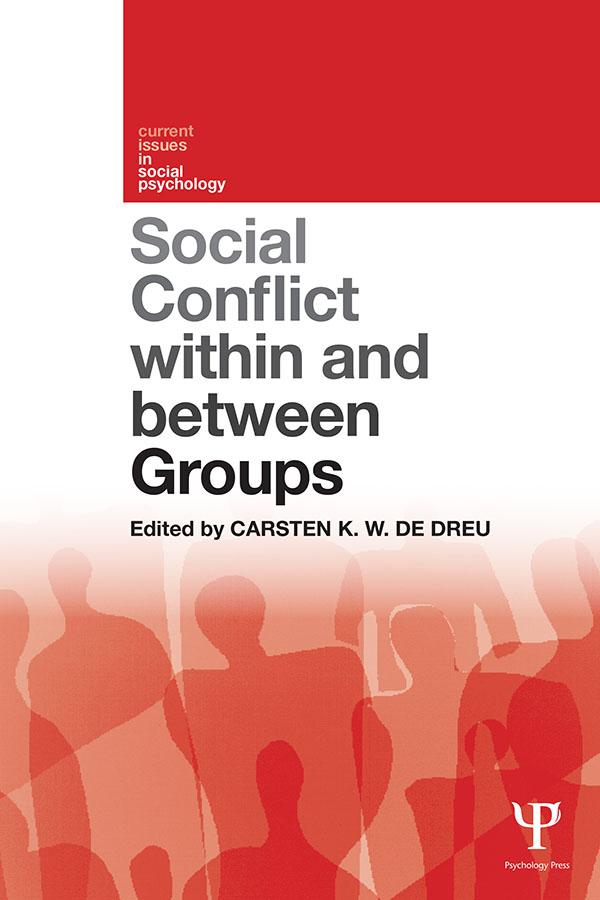
Intergroup competition and conflict create pervasive problems in human society, giving rise to such phenomena as prejudice, terrorism, ethnic cleansing, and interstate war. Citizens, policy makers, social workers, schoolteachers, and politicians wrestle with these problems, and with difficult questions these issues pose:
- What causes conflict to escalate?
- How should we manage conflict within communities, and also in society at large?
- Is conflict always bad, or does it have other more beneficial consequences?
Social Conflict within and between Groups provides an overview of contemporary research from the social sciences on these questions. It brings together the research output of a number of leading researchers in psychology, management and economics, sociology and political science, and draws on the outcomes of ten prominent research programs conducted over the past five years. The chapters cover a range of fascinating topics, including prejudice and discrimination in multi-ethnic societies, and conflict and negotiation in the field of industrial relations. The authors also consider the possibilities for intervention at the interpersonal, intergroup and societal level.
This is the first volume to provide an interdisciplinary overview of the various scientific approaches to studying the origins and consequences of social conflict. It will be of great interest to researchers, graduates and upper-level undergraduate students from across the social and behavioural sciences.
Zahle einfach mit Karte, Klarna, Apple Pay oder Google Pay. Nicht zufrieden? Du hast immer ein 14-tägiges Widerrufsrecht. Lies mehr in unseren AGB. Hast du Fragen, schreib uns eine E-Mail an hello@memmo.org.
Memmo macht das Lernen einfacher – wo auch immer du bist. Bei uns findest du deine Kursbücher und smarte Lerntools an einem Ort: Zusammenfassungen, Quizzes, Podcasts und Lernkarten. Und Ted, dein Lernbuddy, beantwortet alles, was du wissen möchtest. Über 50.000 Studierende lernen bereits hier – gemacht, damit du schneller lernst und weniger Stress hast.