
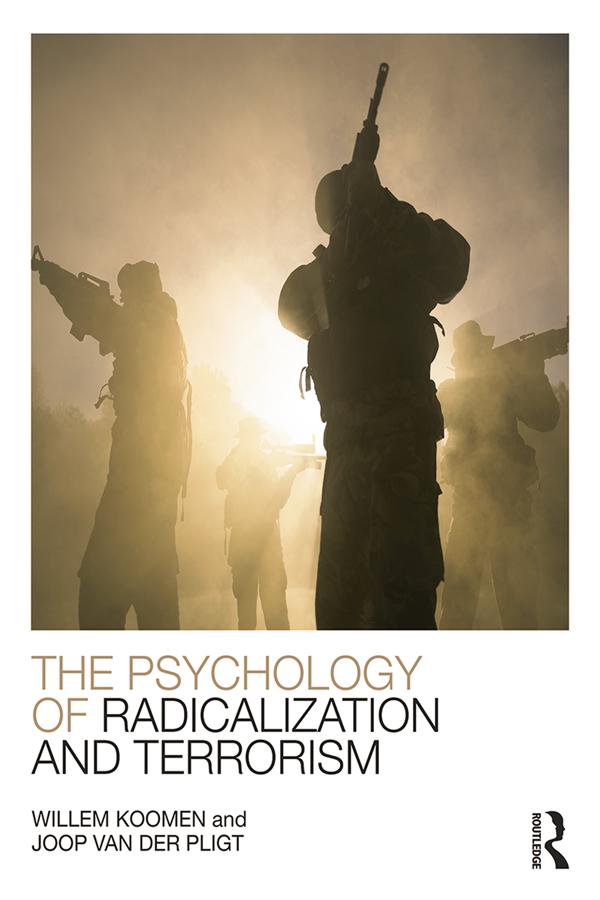
Terrorism and radicalization have a long history, but in recent years their prominence has been a particularly conspicuous and influential feature of the global political landscape. This important book presents an overview of the processes involved in radicalization and terrorism, and introduces a systematic framework which captures the most crucial individual and social factors involved in determining these processes.
The authors begin by considering the possible role of prejudice, economic deprivation, and discrimination, and the cognitive responses and emotions they can trigger. Such responses tend in turn to increase the importance of group membership, and promote intergroup differentiation and polarization, a process which is often accompanied by more pronounced and more extreme religious and ideological beliefs. The book also describes the role of cultural values and social climate in processes of radicalization, as well as the role of personality factors and demographics such as age and marital status.
As for violent terrorist action itself, this final most radical stage is elicited by a number of group factors such as groupthink, isolation, and leadership. Certain cognitive mechanisms – for example, dehumanizing the target and attributing responsibility elsewhere – can also provide excuses for violence. The book explores why some groups turn to violence and others don’t, and it addresses processes of disengagement, deradicalization programs, and other methods used to inhibit the spread of radicalization and terrorism.
The Psychology of Radicalization and Terrorism takes a unique and systematic approach to a vital topic, integrating knowledge from diverse literatures, and using social psychology as a basis for comprehending human behaviour. It will be essential reading for students and researchers from all disciplines seeking a greater understanding of terrorism and violent political conflict in all its forms.
Zahle einfach mit Karte, Klarna, Apple Pay oder Google Pay. Nicht zufrieden? Du hast immer ein 14-tägiges Widerrufsrecht. Lies mehr in unseren AGB. Hast du Fragen, schreib uns eine E-Mail an hello@memmo.org.
Memmo macht das Lernen einfacher – wo auch immer du bist. Bei uns findest du deine Kursbücher und smarte Lerntools an einem Ort: Zusammenfassungen, Quizzes, Podcasts und Lernkarten. Und Ted, dein Lernbuddy, beantwortet alles, was du wissen möchtest. Über 50.000 Studierende lernen bereits hier – gemacht, damit du schneller lernst und weniger Stress hast.