
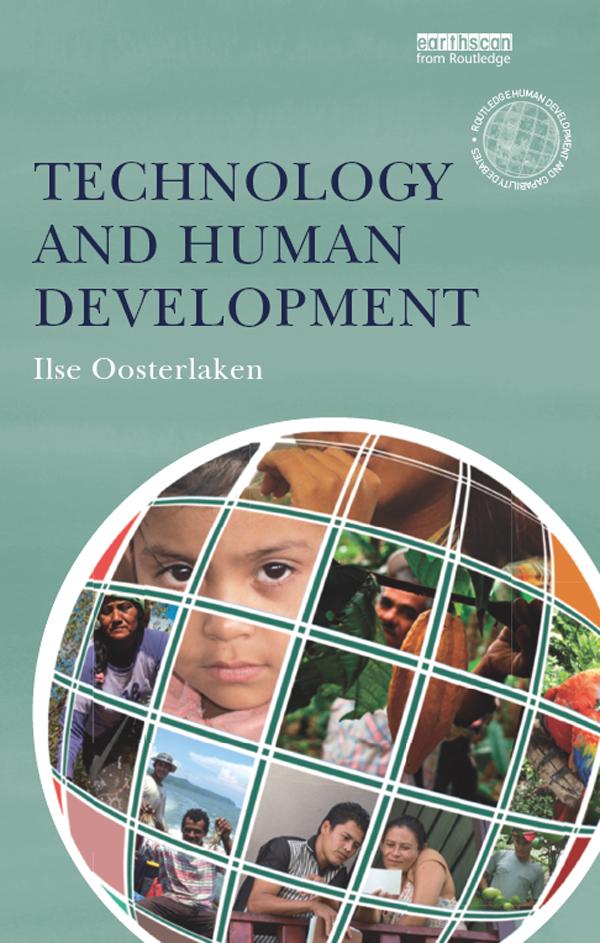
This book introduces the capability approach – in which wellbeing, agency and justice are the core values – as a powerful normative lens to examine technology and its role in development. This approach attaches central moral importance to individual human capabilities, understood as effective opportunities people have to lead the kind of lives they have reason to value. The book examines the strengths, limitations and versatility of the capability approach when applied to technology, and shows the need to supplement it with other approaches in order to deal with the challenges that technology raises.
The first chapter places the capability approach within the context of broader debates about technology and human development – discussing amongst others the appropriate technology movement. The middle part then draws on philosophy and ethics of technology in order to deepen our understanding of the relation between technical artefacts and human capabilities, arguing that we must simultaneously ‘zoom in’ on the details of technological design and ‘zoom out’ to see the broader socio-technical embedding of a technology. The book examines whether technology is merely a neutral instrument that expands what people can do and be in life, or whether technology transfers may also impose certain views of what it means to lead a good life. The final chapter examines the capability approach in relation to contemporary debates about ‘ICT for Development’ (ICT4D), as the technology domain where the approach has been most extensively applied so far.
This book is an invaluable read for students in Development Studies and STS, as well as policy makers, practitioners and engineers looking for an accessible overview of technology and development from the perspective of the capability approach.
Zahle einfach mit Karte, Klarna, Apple Pay oder Google Pay. Nicht zufrieden? Du hast immer ein 14-tägiges Widerrufsrecht. Lies mehr in unseren AGB. Hast du Fragen, schreib uns eine E-Mail an hello@memmo.org.
Memmo macht das Lernen einfacher – wo auch immer du bist. Bei uns findest du deine Kursbücher und smarte Lerntools an einem Ort: Zusammenfassungen, Quizzes, Podcasts und Lernkarten. Und Ted, dein Lernbuddy, beantwortet alles, was du wissen möchtest. Über 50.000 Studierende lernen bereits hier – gemacht, damit du schneller lernst und weniger Stress hast.