
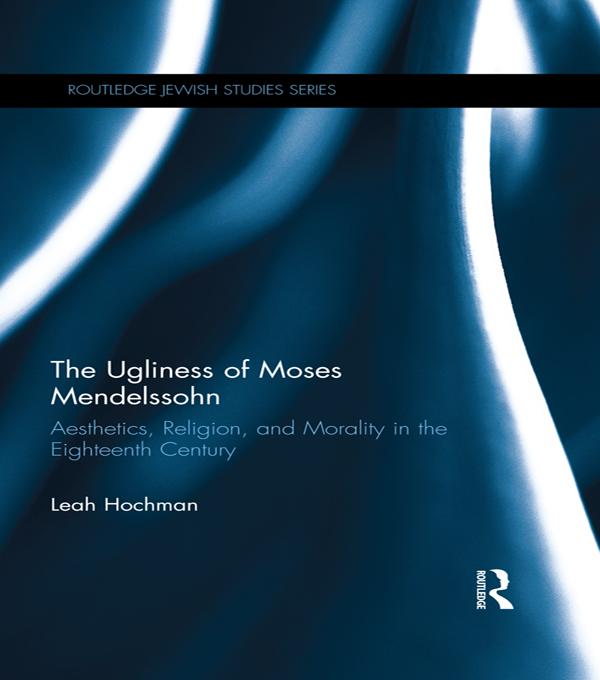
The Ugliness of Moses Mendelssohn examines the idea of ugliness through four angles: philosophical aesthetics, early anthropology, physiognomy and portraiture in the eighteenth-century.
Highlighting a theory that describes the benefit of encountering ugly objects in art and nature, eighteenth-century German Jewish philosopher Moses Mendelssohn recasts ugliness as a positive force for moral education and social progress. According to his theory, ugly objects cause us to think more and thus exercise—and expand—our mental abilities. Known as ugly himself, he was nevertheless portrayed in portraits and in physiognomy as an image of wisdom, gentility, and tolerance. That seeming contradiction—an ugly object (Mendelssohn) made beautiful—illustrates his theory’s possibility: ugliness itself is a positive, even redeeming characteristic of great opportunity.
Presenting a novel approach to eighteenth century aesthetics, this book will be of interest to students and scholars in the fields of Jewish Studies, Philosophy and History.
Zahle einfach mit Karte, Klarna, Apple Pay oder Google Pay. Nicht zufrieden? Du hast immer ein 14-tägiges Widerrufsrecht. Lies mehr in unseren AGB. Hast du Fragen, schreib uns eine E-Mail an hello@memmo.org.
Memmo macht das Lernen einfacher – wo auch immer du bist. Bei uns findest du deine Kursbücher und smarte Lerntools an einem Ort: Zusammenfassungen, Quizzes, Podcasts und Lernkarten. Und Ted, dein Lernbuddy, beantwortet alles, was du wissen möchtest. Über 50.000 Studierende lernen bereits hier – gemacht, damit du schneller lernst und weniger Stress hast.