
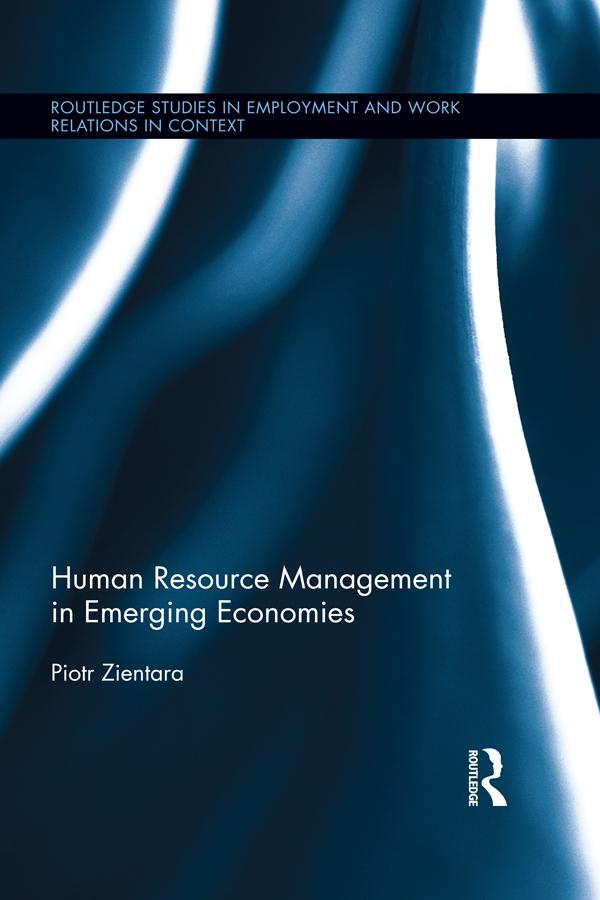
The demise of communism in 1989 in eastern Europe, followed by the break-up of the Soviet Union and the spectacular rise of China and India in the 1990s, brought about a new world order. In eastern Europe communism not only caused large-scale impoverishment and technological slowing, but also signified managerial wastefulness and disregard for employee voice. Yet, since the collapse of the old system, 25 years has passed and things have dramatically improved. Crucially, much has changed in the workplace: a transfer of modern HRM thought led to a shift in the way employees were treated.
Human Resource Management in Emerging Economies explores – by means of qualitative and quantitative research methods – the problematics of human resource management in post-communist emerging economies. It also focuses on such interrelated issues as privatisation, trade-unionism, corporate social responsibility, work-life balance and senior employment. The book adopts a multidisciplinary perspective, referring to theories and concepts associated with management, economics, occupational psychology and sociology. Moreover, it contextualises the discussion by including a politico-historical background, and substantiates its claims with findings from empirical research.
This book’s multi-faceted approach reflects the complex nature of the subject matter, allowing readers to develop a better understanding of the idiosyncrasies of employment relations in eastern Europe.
Zahle einfach mit Karte, Klarna, Apple Pay oder Google Pay. Nicht zufrieden? Du hast immer ein 14-tägiges Widerrufsrecht. Lies mehr in unseren AGB. Hast du Fragen, schreib uns eine E-Mail an hello@memmo.org.
Memmo macht das Lernen einfacher – wo auch immer du bist. Bei uns findest du deine Kursbücher und smarte Lerntools an einem Ort: Zusammenfassungen, Quizzes, Podcasts und Lernkarten. Und Ted, dein Lernbuddy, beantwortet alles, was du wissen möchtest. Über 50.000 Studierende lernen bereits hier – gemacht, damit du schneller lernst und weniger Stress hast.