
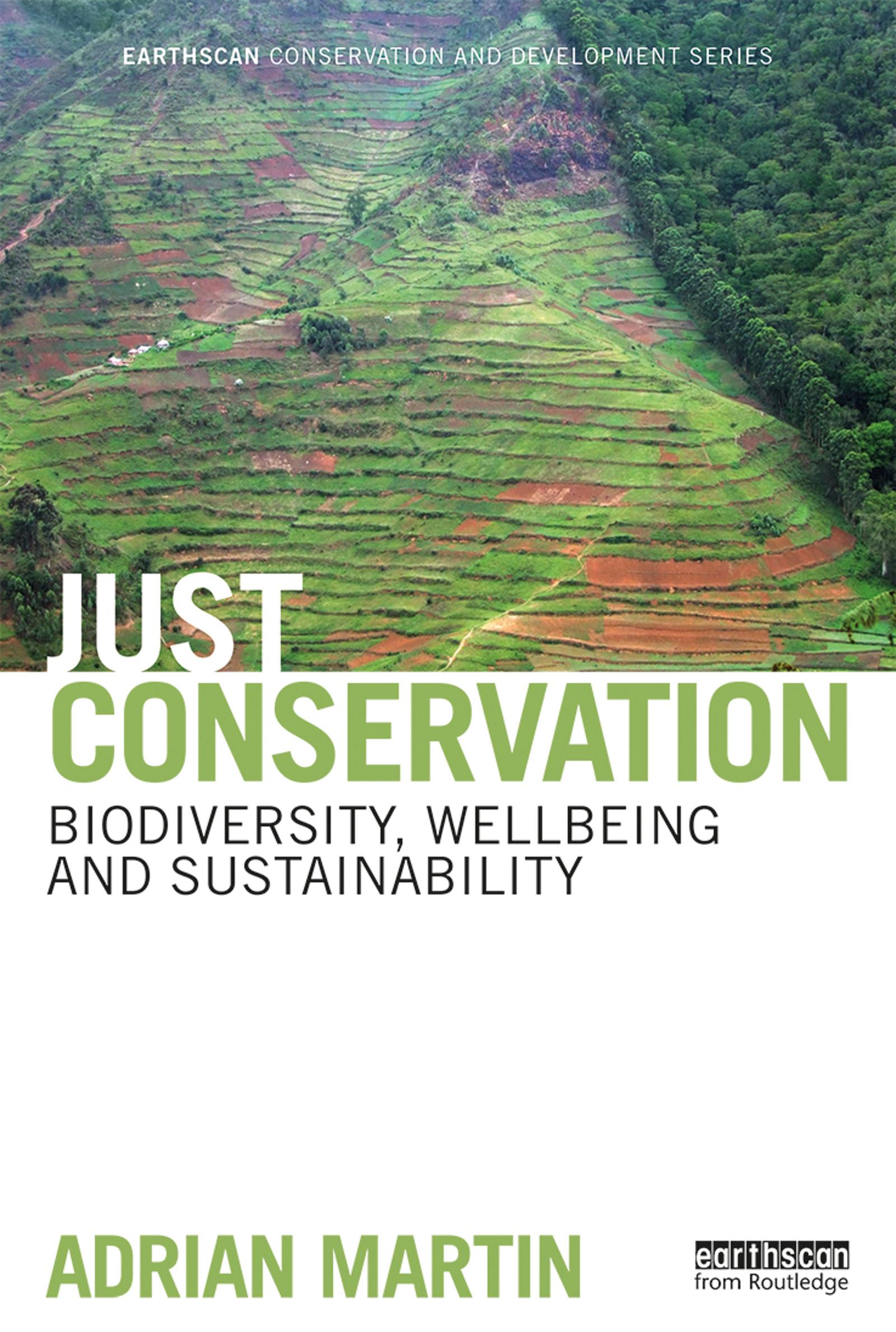
Loss of biodiversity is one of the great environmental challenges facing humanity but unfortunately efforts to reduce the rate of loss have so far failed. At the same time, these efforts have too often resulted in unjust social outcomes in which people living in or near to areas designated for conservation lose access to their territories and resources. In this book the author argues that our approach to biodiversity conservation needs to be more strongly informed by a concern for and understanding of social justice issues.
Injustice can be a driver of biodiversity loss and a barrier to efforts at preservation. Conversely, the pursuit of social justice can be a strong motivation to find solutions to environmental problems. The book therefore argues that the pursuit of socially just conservation is not only intrinsically the right thing to do, but will also be instrumental in bringing about greater success.
The argument for a more socially just conservation is initially developed conceptually, drawing upon ideas of environmental justice that incorporate concerns for distribution, procedure and recognition. It is then applied to a range of approaches to conservation including benefit sharing arrangements, integrated conservation and development projects and market-based approaches such as sustainable timber certification and payments for ecosystem services schemes. Case studies are drawn from the author's research in Rwanda, Uganda, Tanzania, Laos, Bolivia, China and India.
Zahle einfach mit Karte, Klarna, Apple Pay oder Google Pay. Nicht zufrieden? Du hast immer ein 14-tägiges Widerrufsrecht. Lies mehr in unseren AGB. Hast du Fragen, schreib uns eine E-Mail an hello@memmo.org.
Memmo macht das Lernen einfacher – wo auch immer du bist. Bei uns findest du deine Kursbücher und smarte Lerntools an einem Ort: Zusammenfassungen, Quizzes, Podcasts und Lernkarten. Und Ted, dein Lernbuddy, beantwortet alles, was du wissen möchtest. Über 50.000 Studierende lernen bereits hier – gemacht, damit du schneller lernst und weniger Stress hast.