
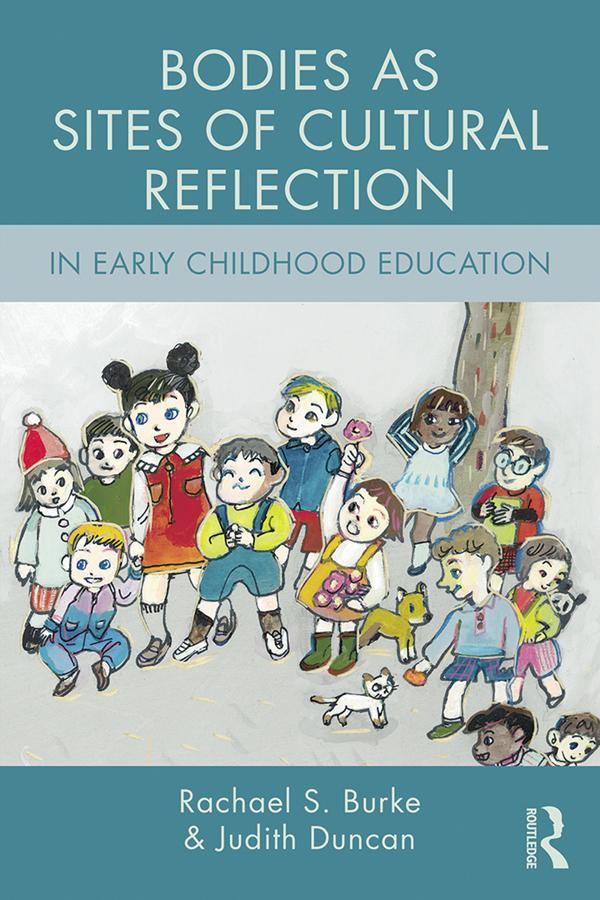
Taking the body as a locus for discussion, Rachael S. Burke and Judith Duncan argue not only that implicit cultural practices shape most of the interactions taking place in early childhood curricula and pedagogy but that many of these practices often go unnoticed or unrecognized as being pedagogy. Current scholars, inspired by Foucault, acknowledge that the body is socially and culturally produced and historically situated—it is simultaneously a part of nature and society as well as a representation of the way that nature and society can be conceived. Every natural symbol originating from the body contains and conveys a social meaning, and every culture selects its own meaning from the myriad of potential body symbolisms.
Bodies as Sites of Cultural Reflection in Early Childhood Education uses empirical examples from qualitative fieldwork conducted in New Zealand and Japan to explore these theories and discuss the ways in which children’s bodies represent a central focus in teachers’ pedagogical discussions and create contexts for the embodiment of children’s experiences in the early years.
Zahle einfach mit Karte, Klarna, Apple Pay oder Google Pay. Nicht zufrieden? Du hast immer ein 14-tägiges Widerrufsrecht. Lies mehr in unseren AGB. Hast du Fragen, schreib uns eine E-Mail an hello@memmo.org.
Memmo macht das Lernen einfacher – wo auch immer du bist. Bei uns findest du deine Kursbücher und smarte Lerntools an einem Ort: Zusammenfassungen, Quizzes, Podcasts und Lernkarten. Und Ted, dein Lernbuddy, beantwortet alles, was du wissen möchtest. Über 50.000 Studierende lernen bereits hier – gemacht, damit du schneller lernst und weniger Stress hast.