
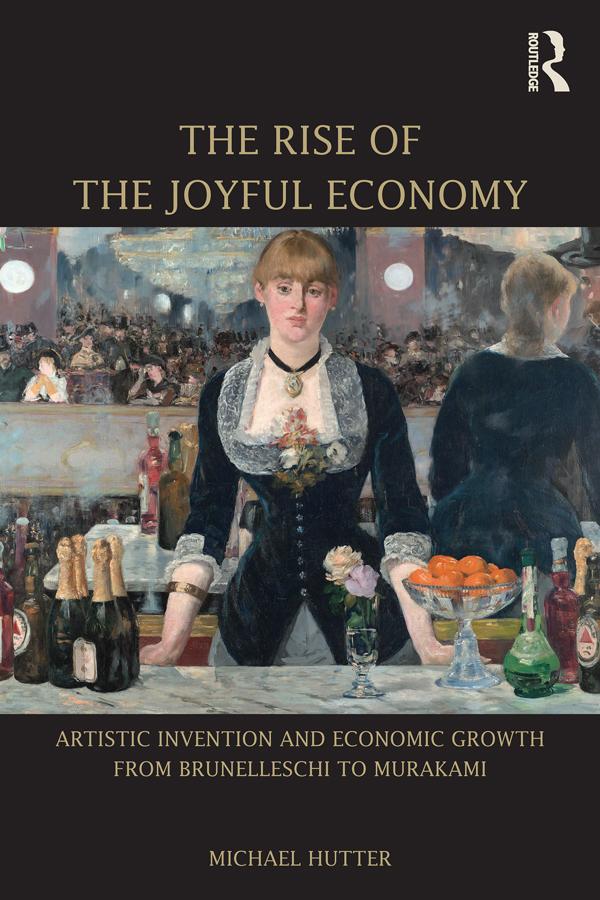
This book argues for the increasing importance of the arts as a major resource in fuelling growth through the experiential dimension of today’s economy. As we move from the knowledge economy to a new stage called the joyful economy, consumers shift their spending from physical objects and technical know-how to experiences of joy and disappointment.
This book investigates how artistic ideas are translated into successful commercial production, and how economic growth impacts artistic invention. It examines cases of successful innovation in the creative industries ranging from the Italian Renaissance to the present. The book suggests a framework where social players move in diverse worlds of value, which leads to a stream of controversies and manias that result in the establishment of new joy products. Studies include the effect of linear perspective, as pioneered by Filippo Brunelleschi, the discovery of taste as an argument for consumption, the serial production of Pop Art and the self-commercialization of contemporary works by artists like Takashi Murakami .
This theoretical and empirical study brings together the fields of cultural economics, economic sociology, management studies and cultural history. In doing so, it offers a fascinating study of how creativity has shaped and fuelled commerce.
Zahle einfach mit Karte, Klarna, Apple Pay oder Google Pay. Nicht zufrieden? Du hast immer ein 14-tägiges Widerrufsrecht. Lies mehr in unseren AGB. Hast du Fragen, schreib uns eine E-Mail an hello@memmo.org.
Memmo macht das Lernen einfacher – wo auch immer du bist. Bei uns findest du deine Kursbücher und smarte Lerntools an einem Ort: Zusammenfassungen, Quizzes, Podcasts und Lernkarten. Und Ted, dein Lernbuddy, beantwortet alles, was du wissen möchtest. Über 50.000 Studierende lernen bereits hier – gemacht, damit du schneller lernst und weniger Stress hast.