
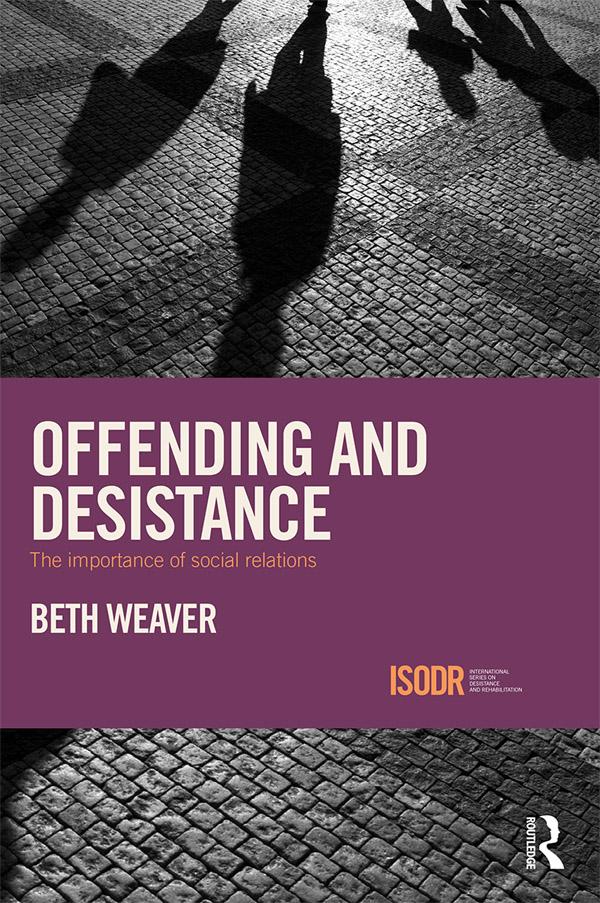
In Offending and Desistance, Beth Weaver examines the role of a co-offending peer group in shaping and influencing offending and desistance, focusing on three phases of their criminal careers: onset, persistence and desistance. While there is consensus across the body of desistance research that social relations have a role to play in variously constraining, enabling and sustaining desistance, no desistance studies have adequately analysed the dynamics or properties of social relations, or their relationship to individuals and social structures. This book aims to reset this balance.
By examining the social relations and life stories of six Scottish men (in their forties), Weaver reveals the central role of friendship groups, intimate relationships and families of formation, employment and religious communities. She shows how, for different individuals, these relations triggered reflexive evaluation of their priorities, behaviours and lifestyles, but with differing results.
Weaver’s re-examination of the relationships between structure, agency, identity and reflexivity in the desistance process ultimately illuminates new directions for research, policy and practice. This book is essential reading for academics and students engaged in the study of criminology and criminal justice, delinquency, probation and criminal law.
Zahle einfach mit Karte, Klarna, Apple Pay oder Google Pay. Nicht zufrieden? Du hast immer ein 14-tägiges Widerrufsrecht. Lies mehr in unseren AGB. Hast du Fragen, schreib uns eine E-Mail an hello@memmo.org.
Memmo macht das Lernen einfacher – wo auch immer du bist. Bei uns findest du deine Kursbücher und smarte Lerntools an einem Ort: Zusammenfassungen, Quizzes, Podcasts und Lernkarten. Und Ted, dein Lernbuddy, beantwortet alles, was du wissen möchtest. Über 50.000 Studierende lernen bereits hier – gemacht, damit du schneller lernst und weniger Stress hast.