
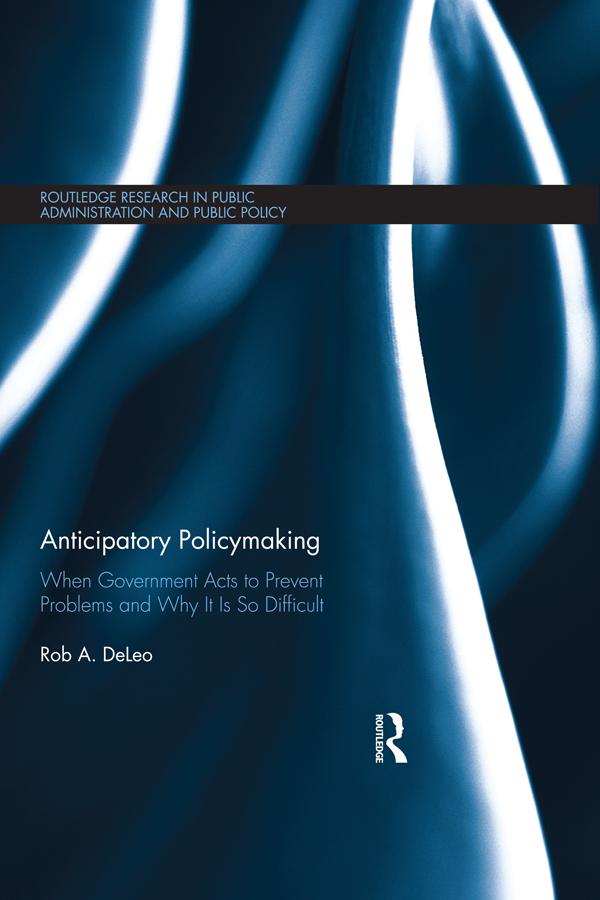
Public policy analysts and political pundits alike tend to describe the policymaking process as a reactive sequence in which government develops solutions for clearly evident and identifiable problems. While this depiction holds true in many cases, it fails to account for instances in which public policy is enacted in anticipation of a potential future problem. Whereas traditional policy concerns manifest themselves through ongoing harms, "anticipatory problems" are projected to occur sometime in the future, and it is the prospect of their potentially catastrophic impact that generates intense speculation and concern in the present.
Anticipatory Policymaking: When Government Acts to Prevent Problems and Why It Is So Difficult provides an in depth examination of the complex process through which United States government institutions anticipate emerging threats. Using contemporary debates over the risks associated with nanotechnology, pandemic influenza, and global warming as case study material, Rob A. DeLeo highlights the distinctive features of proactive governance. By challenging the pervasive assumption of reactive policymaking, DeLeo provides a dynamic approach for conceptualizing the political dimensions of anticipatory policy change.
Zahle einfach mit Karte, Klarna, Apple Pay oder Google Pay. Nicht zufrieden? Du hast immer ein 14-tägiges Widerrufsrecht. Lies mehr in unseren AGB. Hast du Fragen, schreib uns eine E-Mail an hello@memmo.org.
Memmo macht das Lernen einfacher – wo auch immer du bist. Bei uns findest du deine Kursbücher und smarte Lerntools an einem Ort: Zusammenfassungen, Quizzes, Podcasts und Lernkarten. Und Ted, dein Lernbuddy, beantwortet alles, was du wissen möchtest. Über 50.000 Studierende lernen bereits hier – gemacht, damit du schneller lernst und weniger Stress hast.