
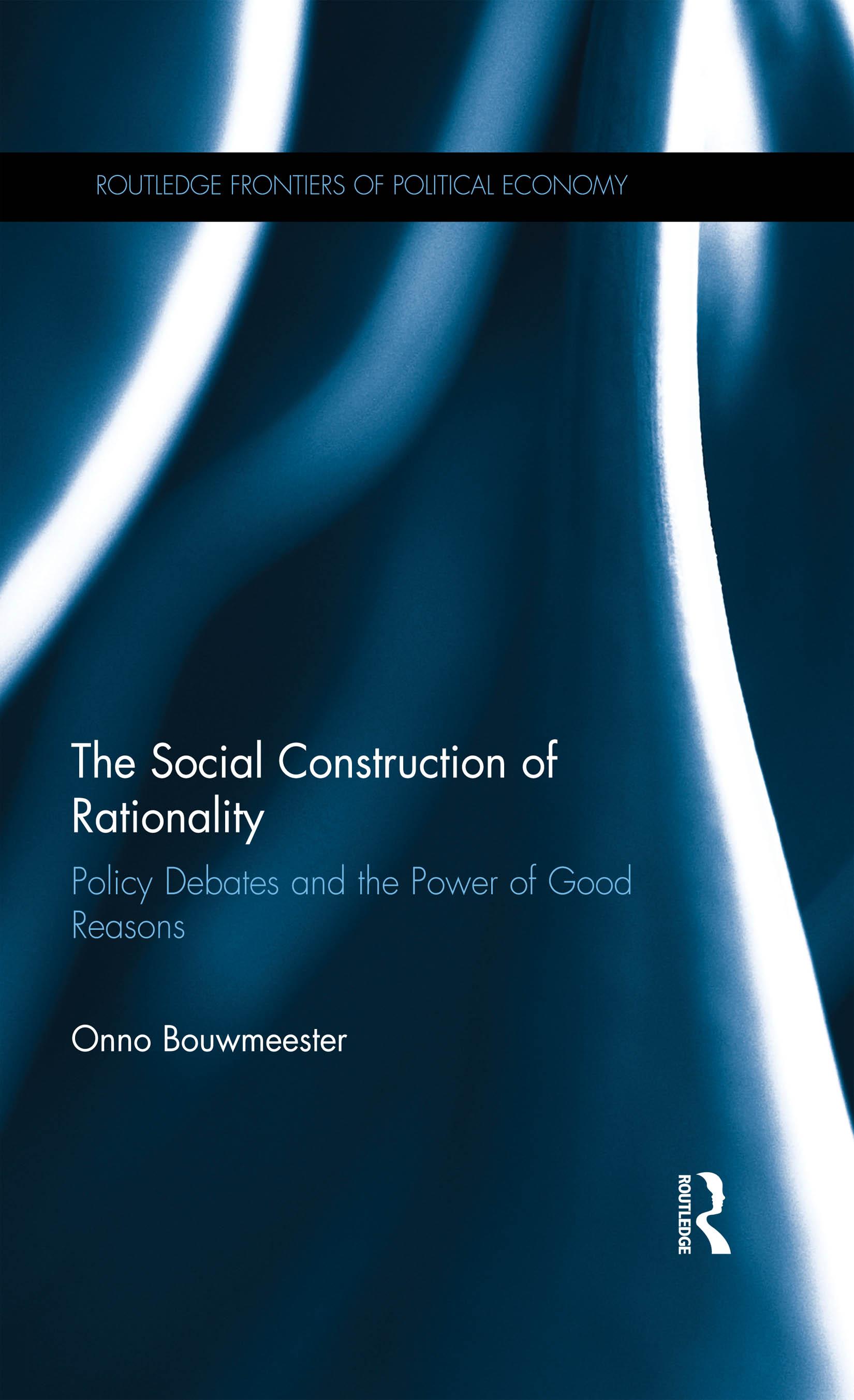
There are many different forms of rationality. In current economic discourse the main focus is on instrumental rationality and optimizing, while organization scholars, behavioural economists and policy scientists focus more on bounded rationality and satisficing. The interplay with value rationality or expressive rationality is mainly discussed in philosophy and sociology, but never in an empirical way. This book shows that not one, but three different forms of rationality (subjective, social and instrumental) determine the final outcomes of strategic decisions executed by major organizations.
Based on an argumentation analysis of six high-profile public debates, this book adds nuance to the concept of bounded rationality. The chapters show how it is socially constructed, and thus dependent on shared beliefs or knowledge, institutional context and personal interests. Three double case studies investigating the three rationalities illustrate how decision makers and stakeholders discuss the appropriateness of these rationalities for making decisions in different practice contexts. The first touches more on personal concerns, like wearing a niqab or looking at obscene art exposed in a public environment; the second investigates debates on improving the rights and position of specific minorities; and the third is based on the agreement on instrumental reasons for two kinds of investments, but the cost arguments are regarded less relevant when social norms or personal interests are violated.
The Social Construction of Rationality is for those who study political economy, economic psychology and public policy, as well as economic theory and philosophy.
Zahle einfach mit Karte, Klarna, Apple Pay oder Google Pay. Nicht zufrieden? Du hast immer ein 14-tägiges Widerrufsrecht. Lies mehr in unseren AGB. Hast du Fragen, schreib uns eine E-Mail an hello@memmo.org.
Memmo macht das Lernen einfacher – wo auch immer du bist. Bei uns findest du deine Kursbücher und smarte Lerntools an einem Ort: Zusammenfassungen, Quizzes, Podcasts und Lernkarten. Und Ted, dein Lernbuddy, beantwortet alles, was du wissen möchtest. Über 50.000 Studierende lernen bereits hier – gemacht, damit du schneller lernst und weniger Stress hast.