
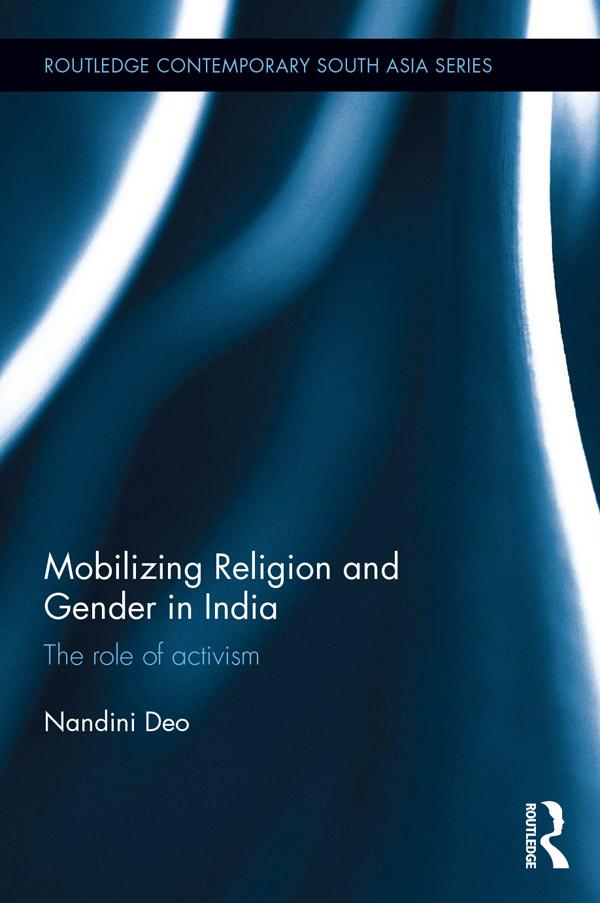
Religious nationalists and women’s activists have transformed India over the past century. They debated the idea of India under colonial rule, shaped the constitutional structure of Indian democracy, and questioned the legitimacy of the postcolonial consensus, as they politicized one dimension of identity.
Using a historical comparative approach, the book argues that external events, activist agency in strategizing, and the political economy of transnational networks explain the relative success and failure of Hindu nationalism and the Indian women’s movement rather than the ideological claims each movement makes. By focusing on how particular activist strategies lead to increased levels of public support, it shows how it is these strategies rather than the ideologies of Hindutva and feminism that mobilize people. Both of these social movements have had decades of great power and influence, and decades of relative irrelevance, and both challenge postcolonial India’s secular settlement – its division of public and private. The book goes on to highlight new insights into the inner dynamics of each movement by showing how the same strategies - grassroots education, electoral mobilization, media management, donor cultivation - lead to similarly positive results.
Bringing together the study of Hindu nationalism and the Indian women’s movement, the book will be of interest to students and scholars of South Asian Religion, Gender Studies, and South Asian Politics.
Zahle einfach mit Karte, Klarna, Apple Pay oder Google Pay. Nicht zufrieden? Du hast immer ein 14-tägiges Widerrufsrecht. Lies mehr in unseren AGB. Hast du Fragen, schreib uns eine E-Mail an hello@memmo.org.
Memmo macht das Lernen einfacher – wo auch immer du bist. Bei uns findest du deine Kursbücher und smarte Lerntools an einem Ort: Zusammenfassungen, Quizzes, Podcasts und Lernkarten. Und Ted, dein Lernbuddy, beantwortet alles, was du wissen möchtest. Über 50.000 Studierende lernen bereits hier – gemacht, damit du schneller lernst und weniger Stress hast.