
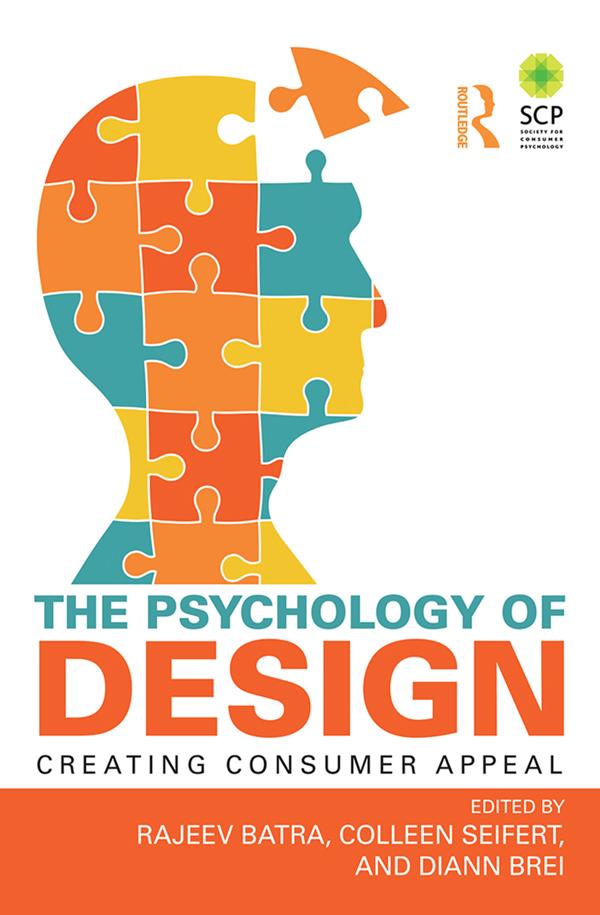
Design plays an increasingly larger role today in creating consumer desire for products and liking for commercial messages. However, the psychological processes involved are only partially understood. In addition, design is inherently interdisciplinary, involving (among others) important elements of aesthetics, anthropology, brand strategy, creativity, design science, engineering, graphic design, industrial design, marketing, material science, product design, and several areas within psychology. While researchers and practitioners in all of these fields seek to learn more about how and why "good" design works its magic, they may benefit from each other’s work. The chapters in this edited book bring together organizing frameworks and reviews of the relevant literatures from many of these contributing disciplines, along with recent empirical work. They cover relevant areas such as embodied cognition, processing fluency, experiential marketing, sensory marketing, visual aesthetics, and other research streams related to the impact of design on consumers. Importantly, the primary focus of these chapters is not on product design that creates functional value for the targeted consumer, but rather on how design can create the kind of emotional, experiential, hedonic, and sensory appeal that results in attracting consumers. Each chapter concludes with Implications for a theory of design as well as for designers.
Zahle einfach mit Karte, Klarna, Apple Pay oder Google Pay. Nicht zufrieden? Du hast immer ein 14-tägiges Widerrufsrecht. Lies mehr in unseren AGB. Hast du Fragen, schreib uns eine E-Mail an hello@memmo.org.
Memmo macht das Lernen einfacher – wo auch immer du bist. Bei uns findest du deine Kursbücher und smarte Lerntools an einem Ort: Zusammenfassungen, Quizzes, Podcasts und Lernkarten. Und Ted, dein Lernbuddy, beantwortet alles, was du wissen möchtest. Über 50.000 Studierende lernen bereits hier – gemacht, damit du schneller lernst und weniger Stress hast.