
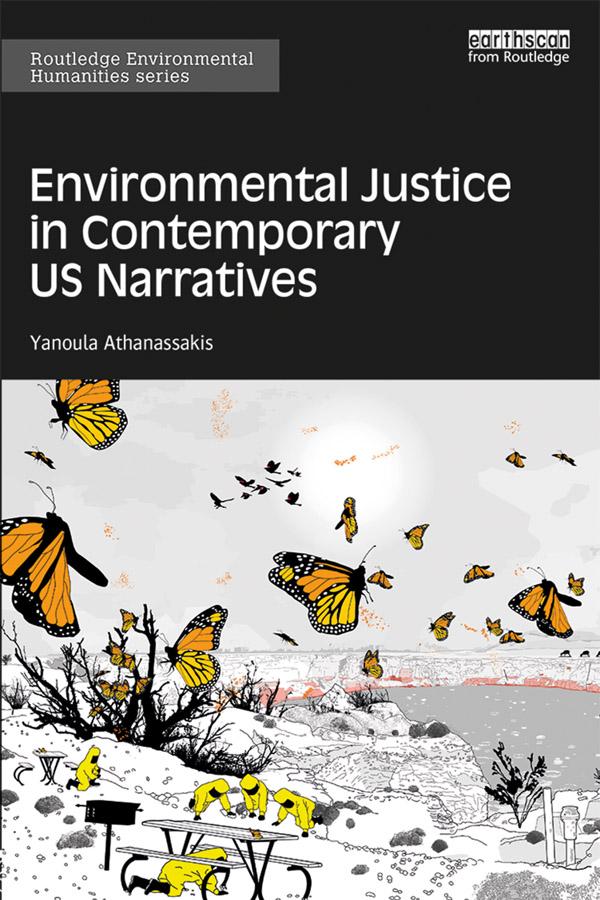
Environmental Justice in Contemporary US Narratives examines post-1929 US artistic interrogations of environmental disruption. Tracing themes of pollution, marine life, and agricultural production in the work of a number of historically significant writers including John Steinbeck, Ruth Ozeki, and Cherríe Moraga, this book outlines a series of incisive dialogues on transnational flows of capital and environmental justice. Texts ranging from The Grapes of Wrath (1939) to Body Toxic (2001) represent the body as vulnerable to a host of environmental risks. They identify "natural disasters" not just as environmental hazards and catastrophes, but also as events intertwined with socioeconomic issues.
With careful textual analysis, Athanassakis shows how twentieth- and twenty-first-century US writers have sought to rethink traditional understandings of how the human being relates to ecological phenomena. Their work, and this study, offer new modes of creative engagement with environmental degradation – engagement that is proactive, ambivalent, and even playful.
This book contributes to vital discussions about the importance of literature for social justice movements, food studies, ecocriticism, and the environmental humanities. The core argument of the book is that artistically imaginative narratives of environmental disturbance can help humans contend with ostensibly uncontrollable, drastic planetary changes.
Zahle einfach mit Karte, Klarna, Apple Pay oder Google Pay. Nicht zufrieden? Du hast immer ein 14-tägiges Widerrufsrecht. Lies mehr in unseren AGB. Hast du Fragen, schreib uns eine E-Mail an hello@memmo.org.
Memmo macht das Lernen einfacher – wo auch immer du bist. Bei uns findest du deine Kursbücher und smarte Lerntools an einem Ort: Zusammenfassungen, Quizzes, Podcasts und Lernkarten. Und Ted, dein Lernbuddy, beantwortet alles, was du wissen möchtest. Über 50.000 Studierende lernen bereits hier – gemacht, damit du schneller lernst und weniger Stress hast.