
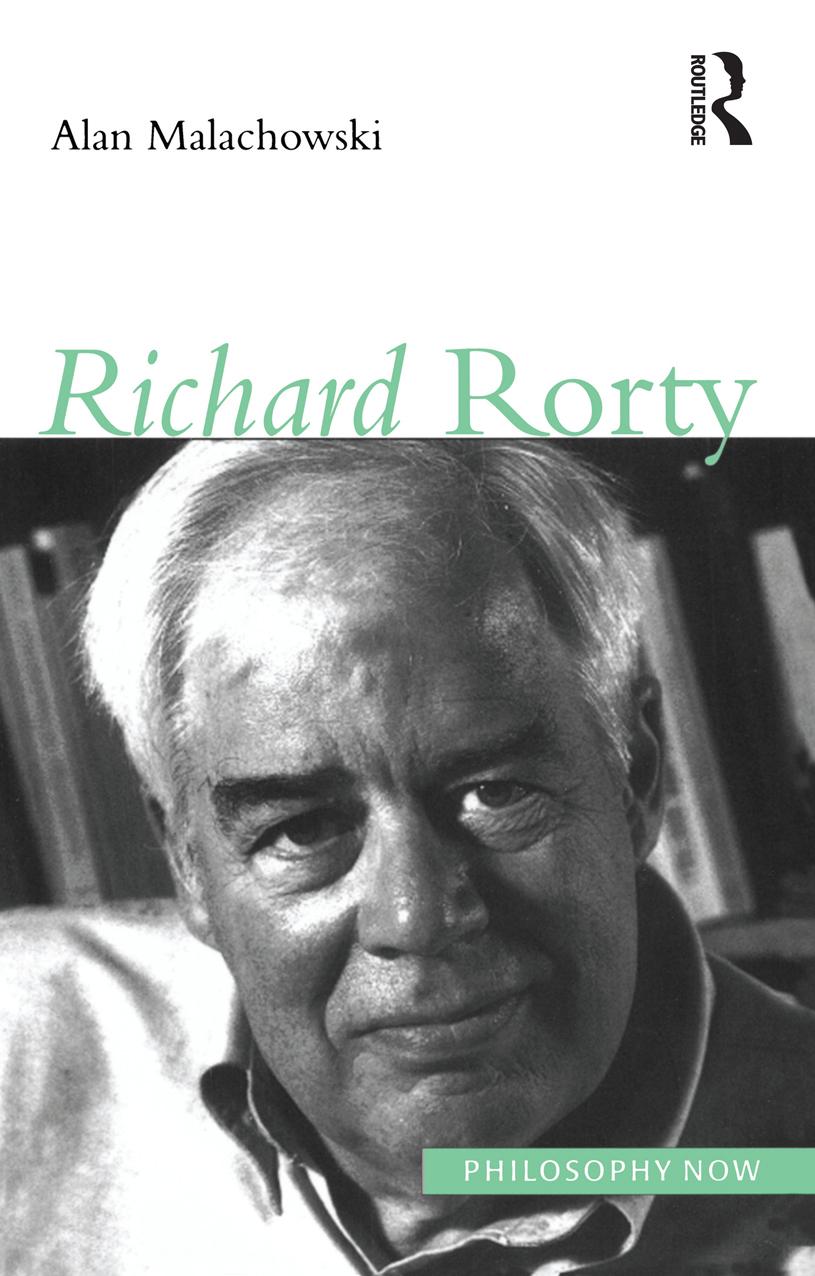
Richard Rorty is notorious for contending that the traditional, foundation-building and truth-seeking ambitions of systematic philosophy should be set aside in favour of a more pragmatic, conversational, hermeneutically guided project. This challenge has not only struck at the heart of philosophy but has ricocheted across other disciplines, both contesting their received self-images and opening up new avenues of inquiry in the process. Alan Malachowski provides an authoritative overview of Rorty's considerable body of work and a general assessment of his impact both within philosophy and in the humanities more broadly. He begins by explaining the genesis of Rorty's central ideas, tracking their development from suggestions in his early papers through their crystallization in his groundbreaking book, "Philosophy and the Mirror of Nature". Malachowski evaluates some of the common criticisms of Rorty's position and his ensuing pragmatism. The book examines the subsequent evolution of his ideas, focusing particularly on the main themes of his second major work, Contingency, Irony, and Solidarity. The political and cultural impact of Rorty's writings on such diverse fields as feminism, cultural and literary theory, and international relations are also considered, and the author explores why Rorty's work has generally found its warmest reception in these areas rather than among mainstream philosophers.
Zahle einfach mit Karte, Klarna, Apple Pay oder Google Pay. Nicht zufrieden? Du hast immer ein 14-tägiges Widerrufsrecht. Lies mehr in unseren AGB. Hast du Fragen, schreib uns eine E-Mail an hello@memmo.org.
Memmo macht das Lernen einfacher – wo auch immer du bist. Bei uns findest du deine Kursbücher und smarte Lerntools an einem Ort: Zusammenfassungen, Quizzes, Podcasts und Lernkarten. Und Ted, dein Lernbuddy, beantwortet alles, was du wissen möchtest. Über 50.000 Studierende lernen bereits hier – gemacht, damit du schneller lernst und weniger Stress hast.
Das könnte dir auch gefallen
Buch kaufen0