
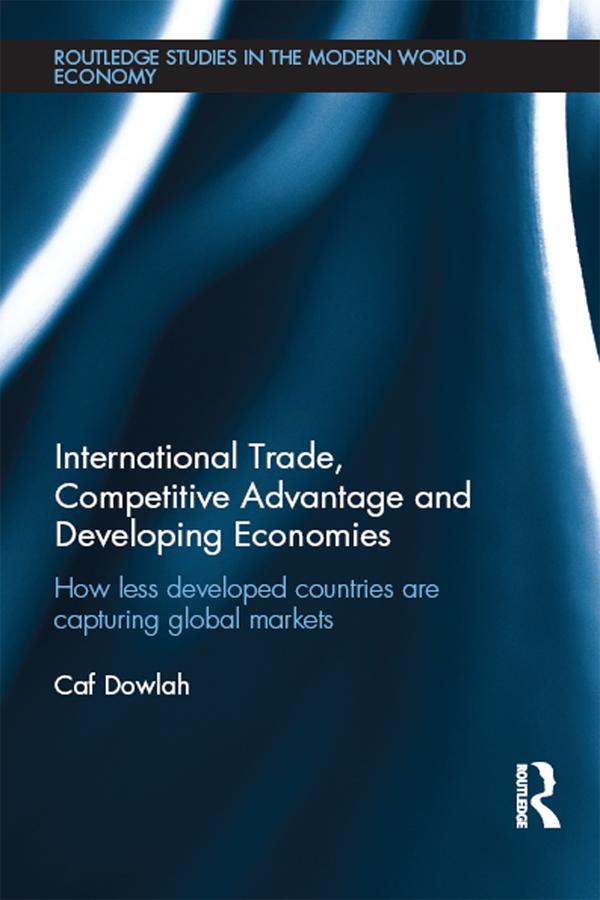
Available research suggests that less developed countries have significant competitive advantage over developed countries in three major areas of international trade: agriculture, textiles and clothing (T&C), and cross-border labor mobility. Incidentally, these are also the trade sectors which experienced widespread protectionist measures, especially in developed world, for decade after decade. Under the World Trade Organization (WTO), which replaced the General Agreement on Tariff and Trade (GATT) in 1995, much of the restrictions in T&C trade has been phased out, but still this sector faces much higher tariff and non-tariff barriers than any other manufacturing sector in world economy. The agricultural sector also experienced significant dismantling of deeply entrenched trade barriers under the WTO over the course of last two decades, but the sector still remains plagued with quite extensive domestic supports, export subsidies, and tariff barriers. At the same time, despite both theoretical expositions and empirical trends point to significant potential gains from cross-border labor mobility, the sector remains mired in a complex quagmire of economic and political restrictions around the world. Thus, all three sectors in which less developed countries have exports interests still remain less liberalized than the sectors in which developed countries have exports interests.
This book provides an in-depth and up-to-date scholarly analysis of all three trade sectors—agriculture, T&C and cross-border labor mobility—with a penetrating scrutiny of historical backgrounds and developments, crosscurrents of interests and perspectives of both developed and developing countries, and evolving trade patterns and potentials in a more liberalized and globalized world economy. The book also identifies critical economic issues and options for less developed countries in the WTO negotiations for further liberalization of agriculture, T&C, and cross-border labor mobility. This volume will be an important point of reference for students, scholars, and practitioners of international trade, economic development, development economics, and WTO-related issues.
Zahle einfach mit Karte, Klarna, Apple Pay oder Google Pay. Nicht zufrieden? Du hast immer ein 14-tägiges Widerrufsrecht. Lies mehr in unseren AGB. Hast du Fragen, schreib uns eine E-Mail an hello@memmo.org.
Memmo macht das Lernen einfacher – wo auch immer du bist. Bei uns findest du deine Kursbücher und smarte Lerntools an einem Ort: Zusammenfassungen, Quizzes, Podcasts und Lernkarten. Und Ted, dein Lernbuddy, beantwortet alles, was du wissen möchtest. Über 50.000 Studierende lernen bereits hier – gemacht, damit du schneller lernst und weniger Stress hast.