
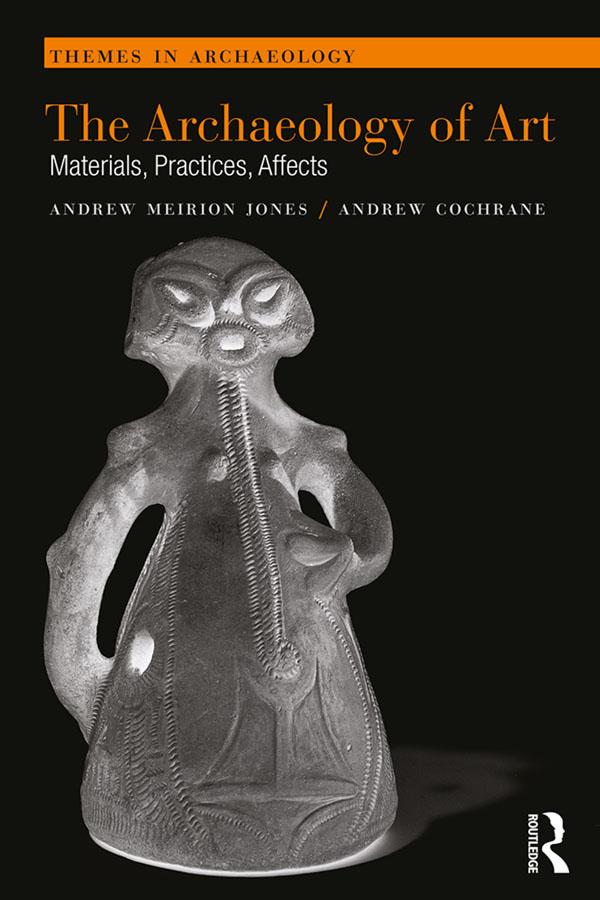
How can archaeologists interpret ancient art and images if they do not treat them as symbols or signifiers of identity?
Traditional approaches to the archaeology of art have borrowed from the history of art and the anthropology of art by focusing on iconography, meaning, communication and identity. This puts the archaeology of art at a disadvantage as an understanding of iconography and meaning requires a detailed knowledge of historical or ethnographic context unavailable to many archaeologists. Rather than playing to archaeology’s weaknesses, the authors argue that an archaeology of art should instead play to archaeology’s strength: the material character of archaeological evidence.
Using case studies - examining rock art, figurines, beadwork, murals, coffin decorations, sculpture and architecture from Europe, the Americas, Asia, Australia, and north Africa -the authors develop an understanding of the affective and effective nature of ancient art and imagery. An analysis of a series of material-based practices, from gesture and improvisation to miniaturisation and gigantism, assembly and disassembly and the use of distinctions in colour enable key concepts, such as style and meaning, to be re-imagined as affective practices. Recasting the archaeology of art as the study of affects offers a new prospectus for the study of ancient art and imagery.
Zahle einfach mit Karte, Klarna, Apple Pay oder Google Pay. Nicht zufrieden? Du hast immer ein 14-tägiges Widerrufsrecht. Lies mehr in unseren AGB. Hast du Fragen, schreib uns eine E-Mail an hello@memmo.org.
Memmo macht das Lernen einfacher – wo auch immer du bist. Bei uns findest du deine Kursbücher und smarte Lerntools an einem Ort: Zusammenfassungen, Quizzes, Podcasts und Lernkarten. Und Ted, dein Lernbuddy, beantwortet alles, was du wissen möchtest. Über 50.000 Studierende lernen bereits hier – gemacht, damit du schneller lernst und weniger Stress hast.