
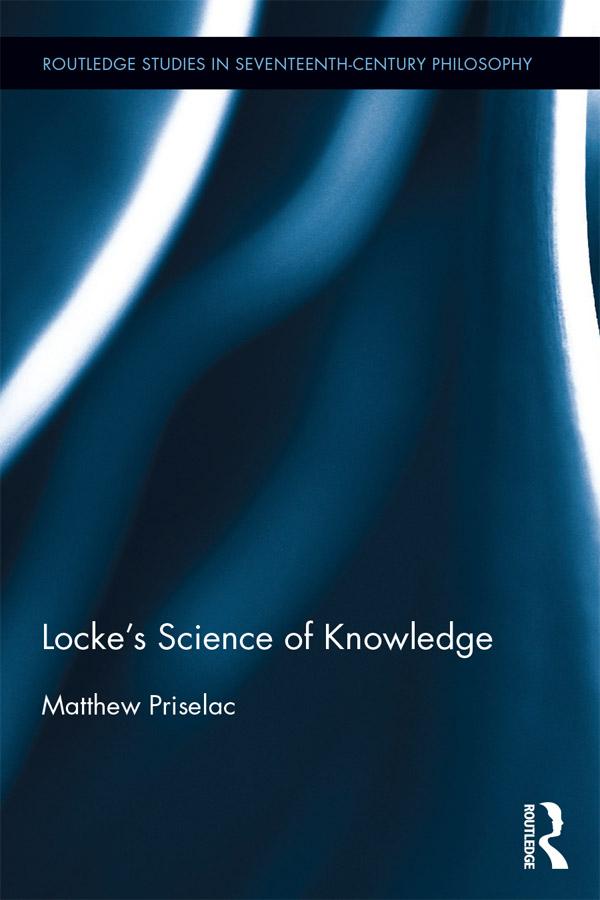
John Locke’s An Essay Concerning Human Understanding begins with a clear statement of an epistemological goal: to explain the limits of human knowledge, opinion, and ignorance. The actual text of the Essay, in stark contrast, takes a long and seemingly meandering path before returning to that goal at the Essay’s end—one with many detours through questions in philosophy of mind, metaphysics, and philosophy of language. Over time, Locke scholarship has come to focus on Locke’s contributions to these parts of philosophy. In Locke’s Science of Knowledge, Priselac refocuses on the Essay’s epistemological thread, arguing that the Essay is unified from beginning to end around its compositional theory of ideas and the active role Locke gives the mind in constructing its thoughts. To support the plausibility and demonstrate the value of this interpretation, Priselac argues that—contrary to its reputation as being at best sloppy and at worst outright inconsistent—Locke’s discussion of skepticism and account of knowledge of the external world fits neatly within the Essay’s epistemology.
Zahle einfach mit Karte, Klarna, Apple Pay oder Google Pay. Nicht zufrieden? Du hast immer ein 14-tägiges Widerrufsrecht. Lies mehr in unseren AGB. Hast du Fragen, schreib uns eine E-Mail an hello@memmo.org.
Memmo macht das Lernen einfacher – wo auch immer du bist. Bei uns findest du deine Kursbücher und smarte Lerntools an einem Ort: Zusammenfassungen, Quizzes, Podcasts und Lernkarten. Und Ted, dein Lernbuddy, beantwortet alles, was du wissen möchtest. Über 50.000 Studierende lernen bereits hier – gemacht, damit du schneller lernst und weniger Stress hast.