
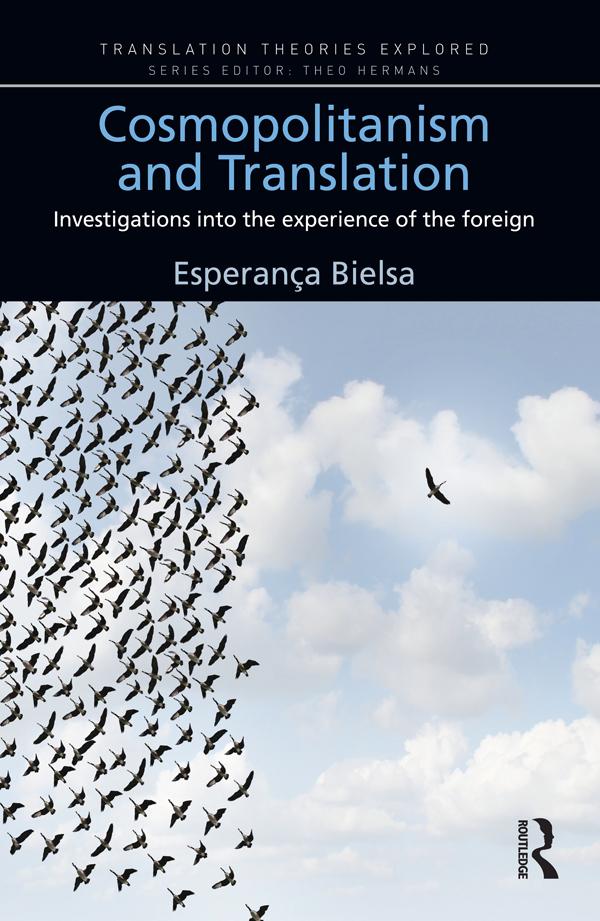
Social theories of the new cosmopolitanism have called attention to the central importance of translation, in areas such as global democracy, human rights and social movements, but translation studies has not engaged systematically with theories of cosmopolitanism.
In Cosmopolitanism and Translation, Esperança Bielsa does just that by focussing on the lived experience of the cosmopolitan stranger, whether a traveller, migrant, refugee or homecomer. With reference to world literature, social theory and foreign news, she argues that this key figure of modernity has a central relevance in the cosmopolitanism debate.
In nine chapters organised into four thematic sections, this book examines:
- theories and insights on "new cosmopolitanism"
- methodological cosmopolitanism
- translation as the experience of the foreign
- the notion of cosmopolitanism as openness to others
- living in translation and the question of the stranger.
With detailed case studies centred on Bolaño, Adorno and Terzani and their work, Cosmopolitanism and Translation places translation at the heart of cosmopolitan theory and makes an essential contribution for students and researchers of both translation studies and social theory.
Zahle einfach mit Karte, Klarna, Apple Pay oder Google Pay. Nicht zufrieden? Du hast immer ein 14-tägiges Widerrufsrecht. Lies mehr in unseren AGB. Hast du Fragen, schreib uns eine E-Mail an hello@memmo.org.
Memmo macht das Lernen einfacher – wo auch immer du bist. Bei uns findest du deine Kursbücher und smarte Lerntools an einem Ort: Zusammenfassungen, Quizzes, Podcasts und Lernkarten. Und Ted, dein Lernbuddy, beantwortet alles, was du wissen möchtest. Über 50.000 Studierende lernen bereits hier – gemacht, damit du schneller lernst und weniger Stress hast.