
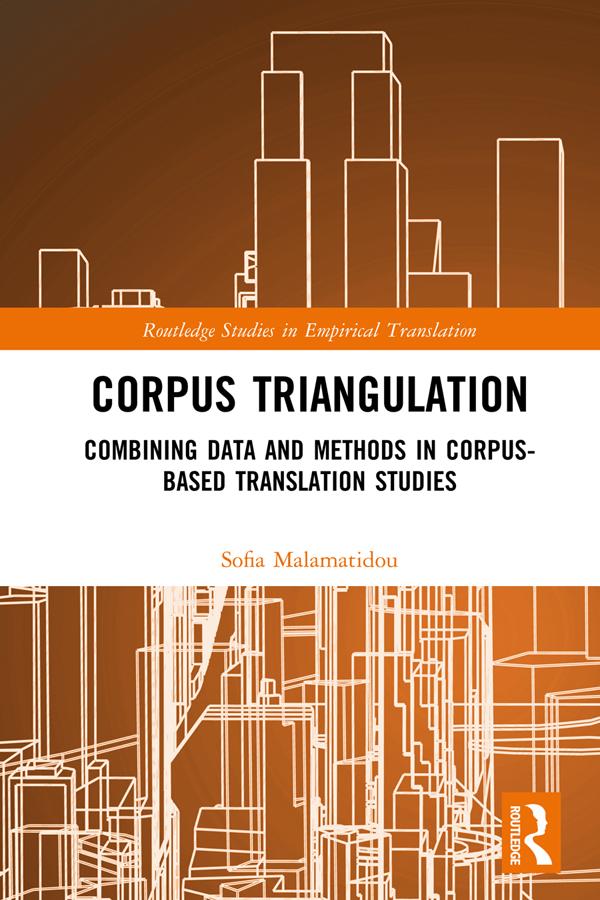
Despite the recognition that corpus-based translation research would benefit from the triangulation of corpora, little has been done in the direction of actually employing combined corpus data and methods in the field. This book aims to address this gap by providing a much needed detailed account of corpus triangulation, where different corpora (e.g. parallel, comparable, synchronic, diachronic) and/or different methods of analysis (e.g. qualitative, quantitative) can be used to increase our understanding of the phenomena where translation plays a key role. The book also demonstrates clearly how the proposed methodology can be fruitfully employed to investigate different linguistic features, through its systematic application to empirical data. The first part of the book introduces the innovative framework for corpus triangulation, which is based on a new and comprehensive corpus typology, while the second part applies the methodological framework to two case studies examining the language of translation and the relationship between translation and language change. The book advances current translation studies in terms of methodology innovation and offers a model on which future studies investigating the network of relationships surrounding translated texts can be based.
Zahle einfach mit Karte, Klarna, Apple Pay oder Google Pay. Nicht zufrieden? Du hast immer ein 14-tägiges Widerrufsrecht. Lies mehr in unseren AGB. Hast du Fragen, schreib uns eine E-Mail an hello@memmo.org.
Memmo macht das Lernen einfacher – wo auch immer du bist. Bei uns findest du deine Kursbücher und smarte Lerntools an einem Ort: Zusammenfassungen, Quizzes, Podcasts und Lernkarten. Und Ted, dein Lernbuddy, beantwortet alles, was du wissen möchtest. Über 50.000 Studierende lernen bereits hier – gemacht, damit du schneller lernst und weniger Stress hast.