
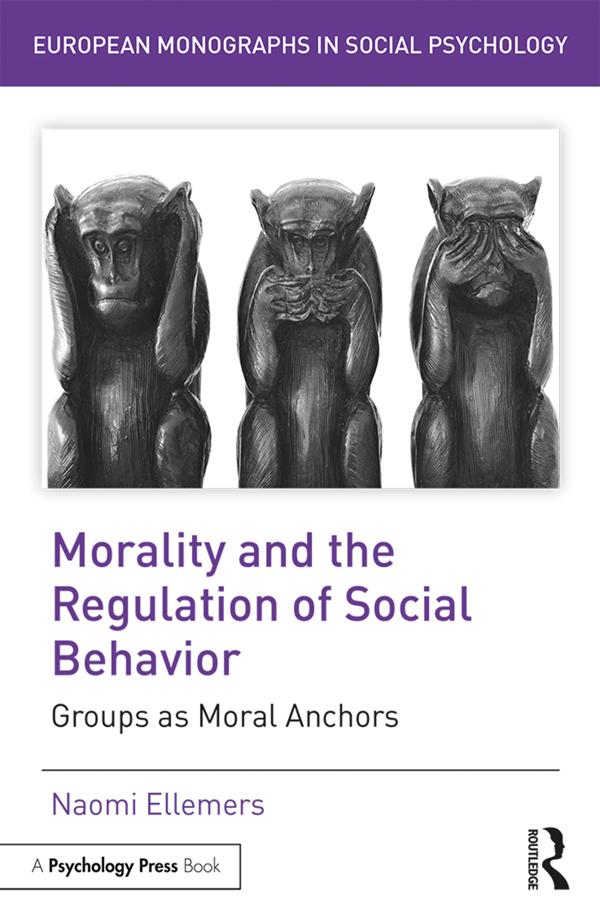
Morality indicates what is the ‘right’ and what is the ‘wrong’ way to behave. It is one of the most popular areas of research in contemporary social psychology, driven in part by recent political-economic crises and the behavioral patterns they exposed. In the past, work on morality tended to highlight individual concerns and moral principles, but more recently researchers have started to address the group context of moral behavior. In Morality and the Regulation of Social Behavior: Groups as Moral Anchors, Naomi Ellemers builds on her extensive research experience to draw together a wide range of insights and findings on morality. She offers an essential integrative summary of the social functions of moral phenomena, examines how social groups contribute to moral values, and explains how groups act as ‘moral anchors’.
Her analysis suggests that intragroup dynamics and the desire to establish a distinct group identity are highly relevant to understanding the implications of morality for the regulation of individual behavior. Yet, this group-level context has not been systematically taken into account in research on morality, nor is it used as a matter of course to inform attempts to influence moral behavior. Building on social identity and self-categorization principles, this unique book explicitly considers social groups as an important source of moral values, and examines how this impacts on individual decision making as well as collective behaviors and relations between groups in society. Throughout the book, Ellemers presents results from her own research to elucidate how social behavior is affected by moral concerns. In doing this, she highlights how such insights advance our understanding of moral behavior and moral judgments for of people who live together in communities and work together in organizations.
Morality and the Regulation of Social Behavior is essential reading for academics and students in social psychology and related disciplines, and is an invaluable resource for practitioners interested in understanding moral behavior.
Zahle einfach mit Karte, Klarna, Apple Pay oder Google Pay. Nicht zufrieden? Du hast immer ein 14-tägiges Widerrufsrecht. Lies mehr in unseren AGB. Hast du Fragen, schreib uns eine E-Mail an hello@memmo.org.
Memmo macht das Lernen einfacher – wo auch immer du bist. Bei uns findest du deine Kursbücher und smarte Lerntools an einem Ort: Zusammenfassungen, Quizzes, Podcasts und Lernkarten. Und Ted, dein Lernbuddy, beantwortet alles, was du wissen möchtest. Über 50.000 Studierende lernen bereits hier – gemacht, damit du schneller lernst und weniger Stress hast.