
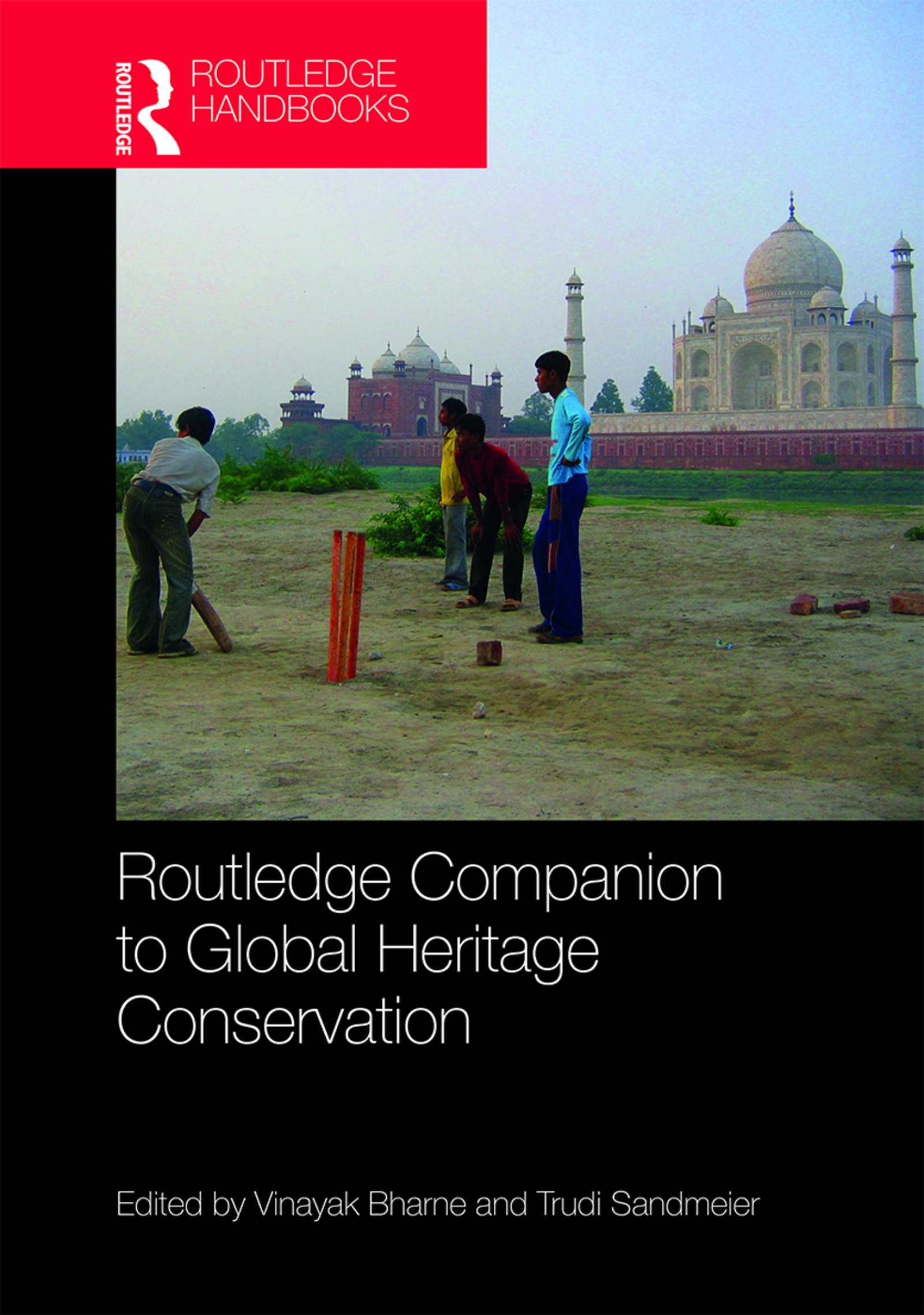
The act of identifying, protecting, restoring, and reusing buildings, districts, and built landscapes of historic and cultural significance is, at its best, a reflective and consequential process of urban and socio-economic reform. It has the potential to reconcile conflicting memories, meanings, and cultural tensions, bridging and expanding the perceived boundaries of multiple disciplines towards bigger aspirations of city-making and social justice.
How and where do such aspirations overlap and differ across nations and societies across the world? In places with different histories, governance structures, regulatory stringency, and populist dispositions, who are the specific players, and what are the actual processes that bring about bigger and deeper change beyond just the conservation of an architectural or urban entity of perceived value?
This collection of scholarly articles by theorists, academics, and practitioners explores the global complexity, guises, and potential of heritage conservation. Going from Tokyo to Cairo, Shenzhen to Rome, and Delhi to Moscow, this volume examines a vast range of topics – indigenous habitats, urban cores, vernacular infrastructure, colonial towns, squatters, burial sites, war zones, and modern landmarks. It surfaces numerous inherent issues – water stress, deforestation, social oppression, poverty, religion, immigration, and polity, expanding the definitions of heritage conservation as both a professional discipline and socio-cultural catalyst. This book argues that the intellectual and praxis limits of heritage conservation – as the agency of reading, defining, and intervening with built heritage – can be expansive, aimed at bigger positive change beyond a specific subject or object; plural, enmeshed with multiple fields and specializations; and empathetic, born from the actual socio-political realities of a place.
Zahle einfach mit Karte, Klarna, Apple Pay oder Google Pay. Nicht zufrieden? Du hast immer ein 14-tägiges Widerrufsrecht. Lies mehr in unseren AGB. Hast du Fragen, schreib uns eine E-Mail an hello@memmo.org.
Memmo macht das Lernen einfacher – wo auch immer du bist. Bei uns findest du deine Kursbücher und smarte Lerntools an einem Ort: Zusammenfassungen, Quizzes, Podcasts und Lernkarten. Und Ted, dein Lernbuddy, beantwortet alles, was du wissen möchtest. Über 50.000 Studierende lernen bereits hier – gemacht, damit du schneller lernst und weniger Stress hast.