
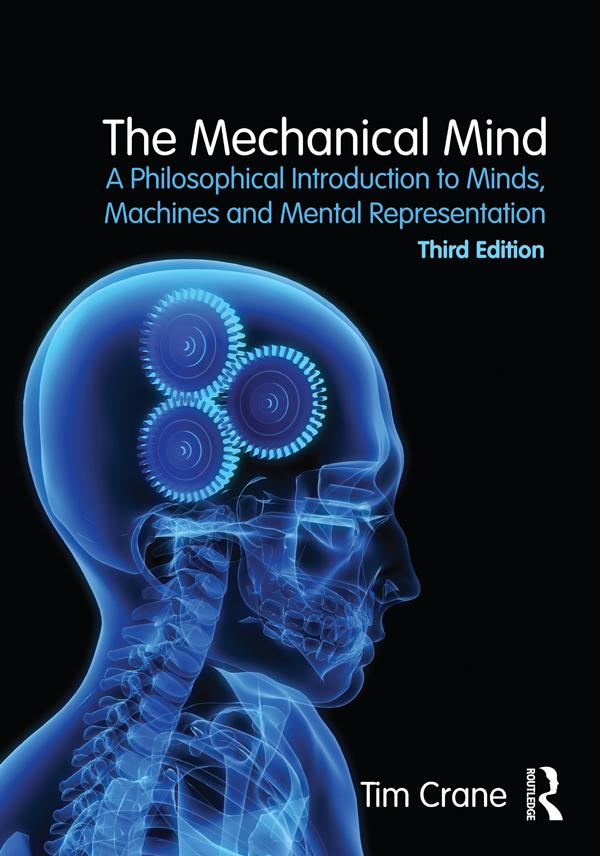
How can the human mind represent the external world? What is thought, and can it be studied scientifically? Should we think of the mind as a kind of machine? Is the mind a computer? Can a computer think? Tim Crane sets out to answer these questions and more in a lively and straightforward way, presuming no prior knowledge of philosophy or related disciplines.
Since its first publication, The Mechanical Mind has introduced thousands of people to some of the most important ideas in contemporary philosophy of mind. Crane explains the fundamental ideas that cut across philosophy of mind, artificial intelligence and cognitive science: what the mind–body problem is; what a computer is and how it works; what thoughts are and how computers and minds might have them. He examines different theories of the mind from dualist to eliminativist, and questions whether there can be thought without language and whether the mind is subject to the same causal laws as natural phenomena. The result is a fascinating exploration of the theories and arguments surrounding the notions of thought and representation.
This third edition has been fully revised and updated, and includes a wholly new chapter on externalism about mental content and the extended and embodied mind. There is a stronger emphasis on the environmental and bodily context in which thought occurs. Many chapters have been reorganised to make the reader’s passage through the book easier. The book now contains a much more detailed guide to further reading, and the chronology and the glossary of technical terms have also been updated.
The Mechanical Mind is accessible to anyone interested in the mechanisms of our minds, and essential reading for those studying philosophy of mind, philosophy of psychology, or cognitive psychology.
Zahle einfach mit Karte, Klarna, Apple Pay oder Google Pay. Nicht zufrieden? Du hast immer ein 14-tägiges Widerrufsrecht. Lies mehr in unseren AGB. Hast du Fragen, schreib uns eine E-Mail an hello@memmo.org.
Memmo macht das Lernen einfacher – wo auch immer du bist. Bei uns findest du deine Kursbücher und smarte Lerntools an einem Ort: Zusammenfassungen, Quizzes, Podcasts und Lernkarten. Und Ted, dein Lernbuddy, beantwortet alles, was du wissen möchtest. Über 50.000 Studierende lernen bereits hier – gemacht, damit du schneller lernst und weniger Stress hast.