
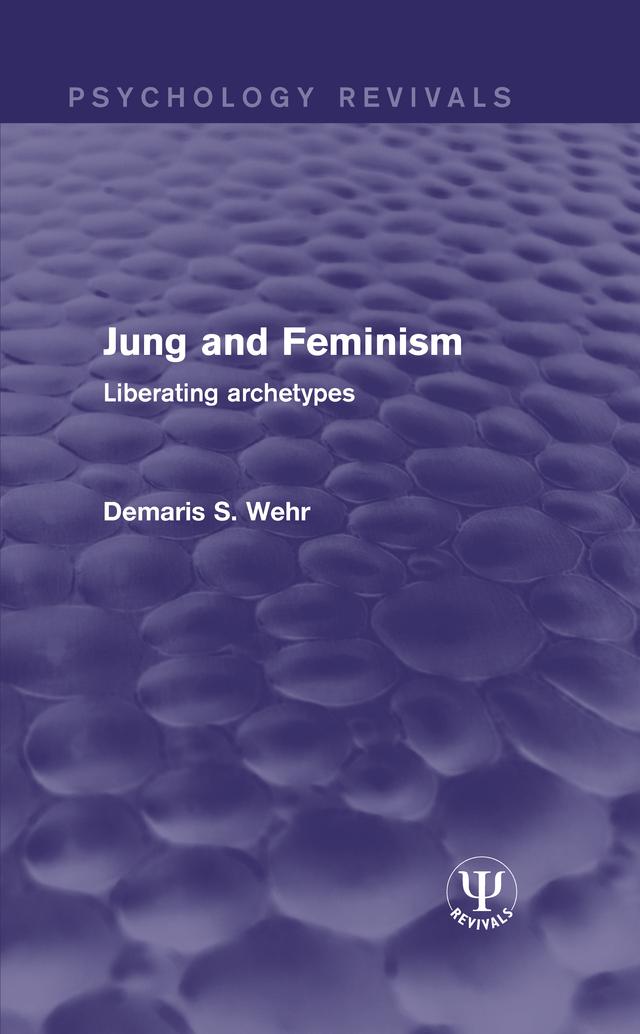
Jung, in contrast to Freud, has typically been considered more sympathetic to women largely because of his emphasis on the feminine as a way of being in the world and on the ‘anima’, the unconscious feminine aspect of male personality. Feminists, however, have viewed Jung’s whole notion of the ‘feminine’ with suspicion, seeing it as a projection of male psyche and not an authentic understanding of female humanity.
For Demaris Wehr both feminism and Jungian psychology have been guiding forces, and in this book, originally published in 1988, she mediates between feminists and classical Jungians – two groups historically at odds. She faces squarely the male-centred assumptions of some Jungian concepts and challenges Jung’s claims for the universality and purely empirical basis of his work, but nevertheless maintains an appreciation for the value of Jung’s understanding of human nature and the process of individuation. By bringing the insights of feminist theology to bear on the seemingly unbridgeable gap between analytical psychology and feminism, she succeeds in reclaiming Jungian psychology as a freeing therapy for women and reveals it as the ultimately liberating vision its founder intended it to be.
Zahle einfach mit Karte, Klarna, Apple Pay oder Google Pay. Nicht zufrieden? Du hast immer ein 14-tägiges Widerrufsrecht. Lies mehr in unseren AGB. Hast du Fragen, schreib uns eine E-Mail an hello@memmo.org.
Memmo macht das Lernen einfacher – wo auch immer du bist. Bei uns findest du deine Kursbücher und smarte Lerntools an einem Ort: Zusammenfassungen, Quizzes, Podcasts und Lernkarten. Und Ted, dein Lernbuddy, beantwortet alles, was du wissen möchtest. Über 50.000 Studierende lernen bereits hier – gemacht, damit du schneller lernst und weniger Stress hast.