
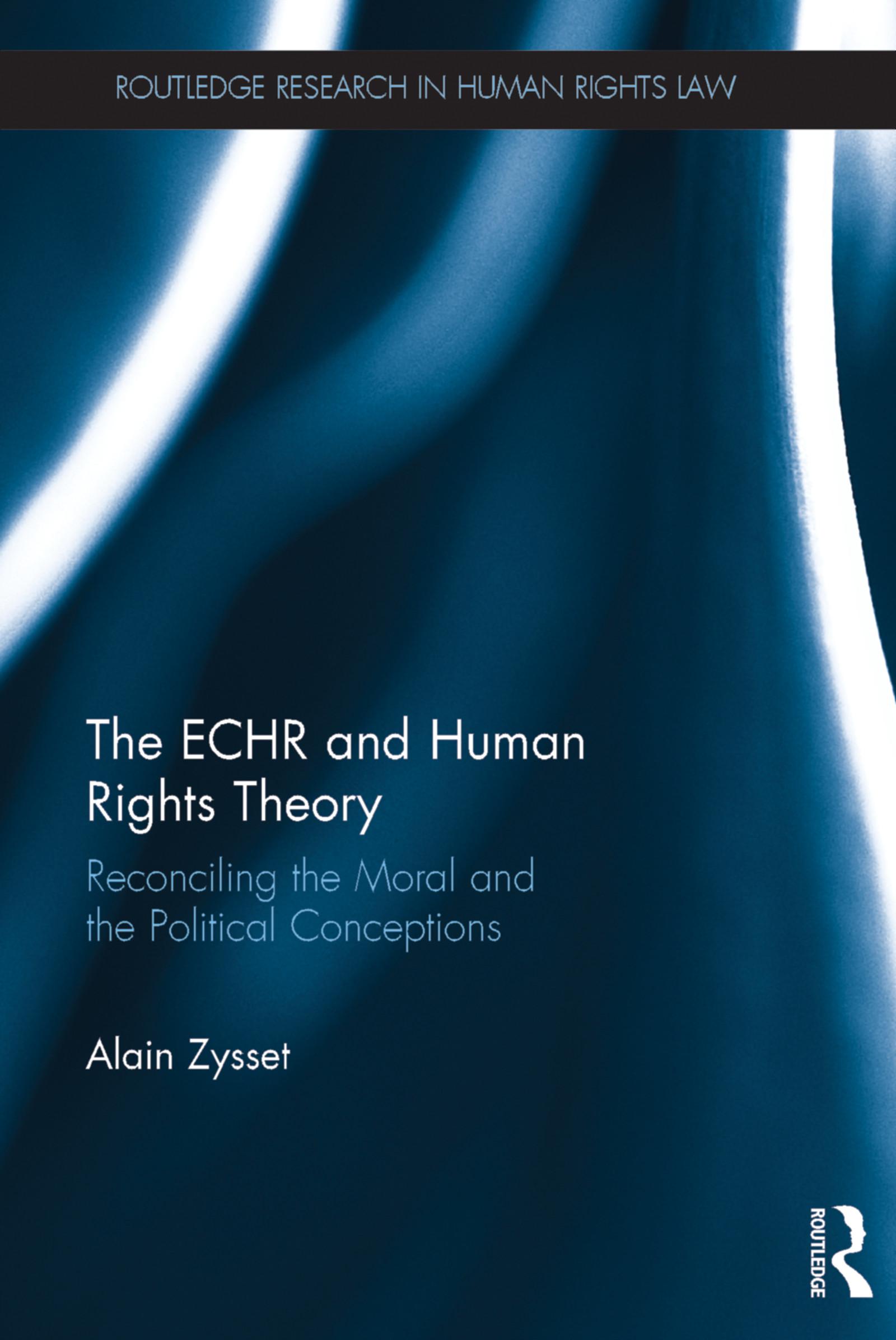
The European Convention of Human Rights (ECHR) has been relatively neglected in the field of normative human rights theory. This book aims to bridge the gap between human rights theory and the practice of the ECHR. In order to do so, it tests the two overarching approaches in human rights theory literature: the ethical and the political, against the practice of the ECHR ‘system’. The book also addresses the history of the ECHR and the European Court of Human Rights (ECtHR) as an international legal and political institution.
The book offers a democratic defence of the authority of the ECtHR. It illustrates how a conception of democracy – more specifically, the egalitarian argument for democracy developed by Thomas Christiano on the domestic level – can illuminate the reasoning of the Court, including the allocation of the margin of appreciation on a significant number of issues. Alain Zysset argues that the justification of the authority of the ECtHR – its prominent status in the domestic legal orders – reinforces the democratic process within States Parties, thereby consolidating our status as political equals in those legal and political orders.
Zahle einfach mit Karte, Klarna, Apple Pay oder Google Pay. Nicht zufrieden? Du hast immer ein 14-tägiges Widerrufsrecht. Lies mehr in unseren AGB. Hast du Fragen, schreib uns eine E-Mail an hello@memmo.org.
Memmo macht das Lernen einfacher – wo auch immer du bist. Bei uns findest du deine Kursbücher und smarte Lerntools an einem Ort: Zusammenfassungen, Quizzes, Podcasts und Lernkarten. Und Ted, dein Lernbuddy, beantwortet alles, was du wissen möchtest. Über 50.000 Studierende lernen bereits hier – gemacht, damit du schneller lernst und weniger Stress hast.