
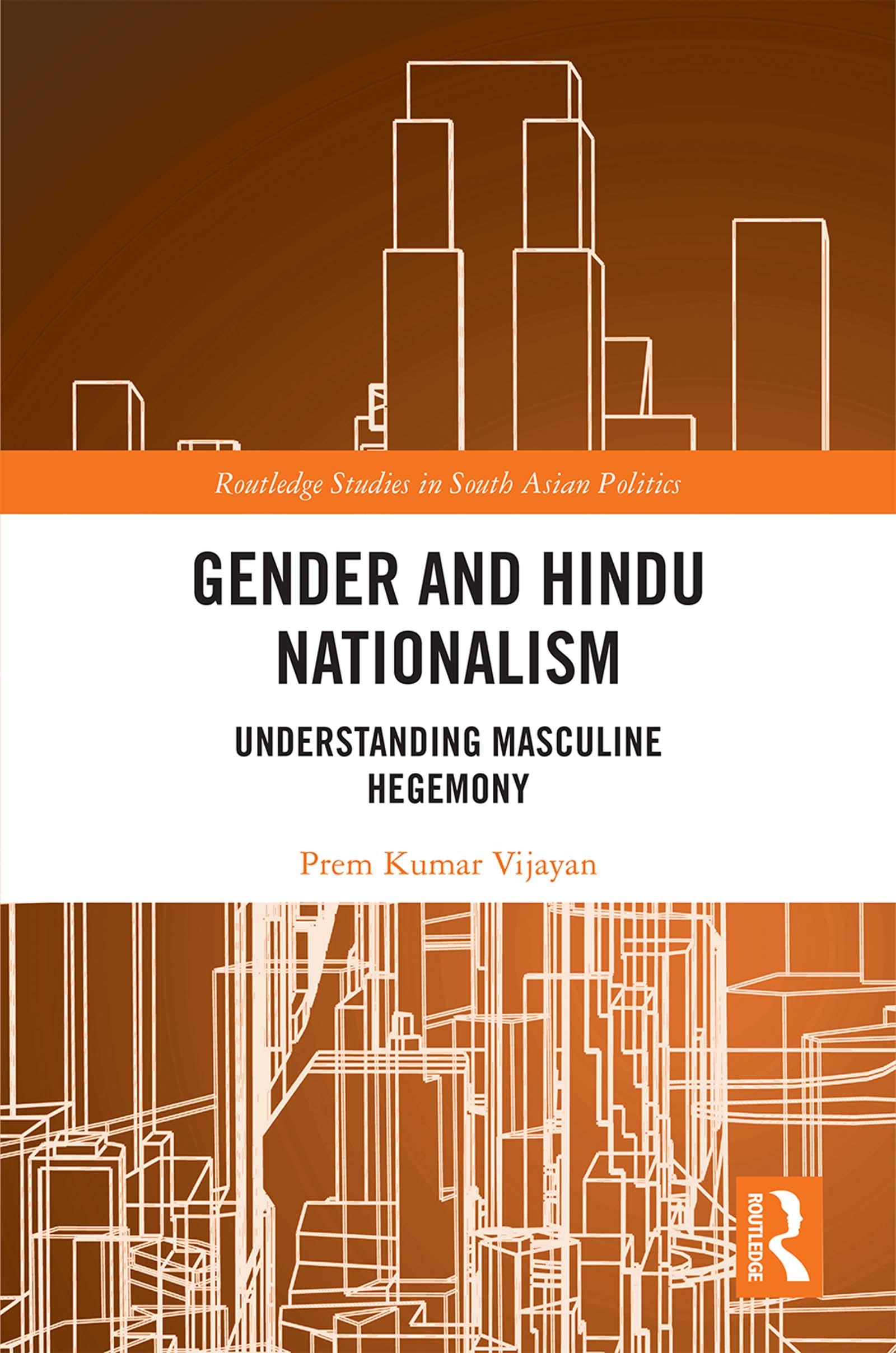
This book presents an innovative approach to gender, nationalism, and the relations between them, and analyses the broader social base of Hindu nationalist organisation to understand the growth of 'Hindutva', or Hindu nationalism, in India.
Arguing that Hindu nationalist thought and predilections emerge out of, and, in turn, feed, pre-existing gendered tendencies, the author presents the new concept of 'masculine hegemony', specifically Brahmanical masculine hegemony. The book offers a historical overview of the processes that converge in the making of the identity ‘Hindu’, in the making of the religion ‘Hinduism’, and in the shaping of the movement known as ‘Hindutva’. The impact of colonialism, social reform, and caste movements is explored, as is the role of key figures such as Mohandas Gandhi, Indira Gandhi, and Narendra Modi. The book sheds light on the close, yet uneasy, relations that Hindu nationalist thought and practice have with conceptions of 'modernity', 'development' and women's movements, and politics, and the future of Hindu nationalism in India.
A new approach to the study of Hindu nationalism, this book offers a theoretically innovative understanding of Indian history and socio-politics. It will be of interest to academics working in the field of Gender studies and Asian Studies, in particular South Asian history and politics.
Zahle einfach mit Karte, Klarna, Apple Pay oder Google Pay. Nicht zufrieden? Du hast immer ein 14-tägiges Widerrufsrecht. Lies mehr in unseren AGB. Hast du Fragen, schreib uns eine E-Mail an hello@memmo.org.
Memmo macht das Lernen einfacher – wo auch immer du bist. Bei uns findest du deine Kursbücher und smarte Lerntools an einem Ort: Zusammenfassungen, Quizzes, Podcasts und Lernkarten. Und Ted, dein Lernbuddy, beantwortet alles, was du wissen möchtest. Über 50.000 Studierende lernen bereits hier – gemacht, damit du schneller lernst und weniger Stress hast.