
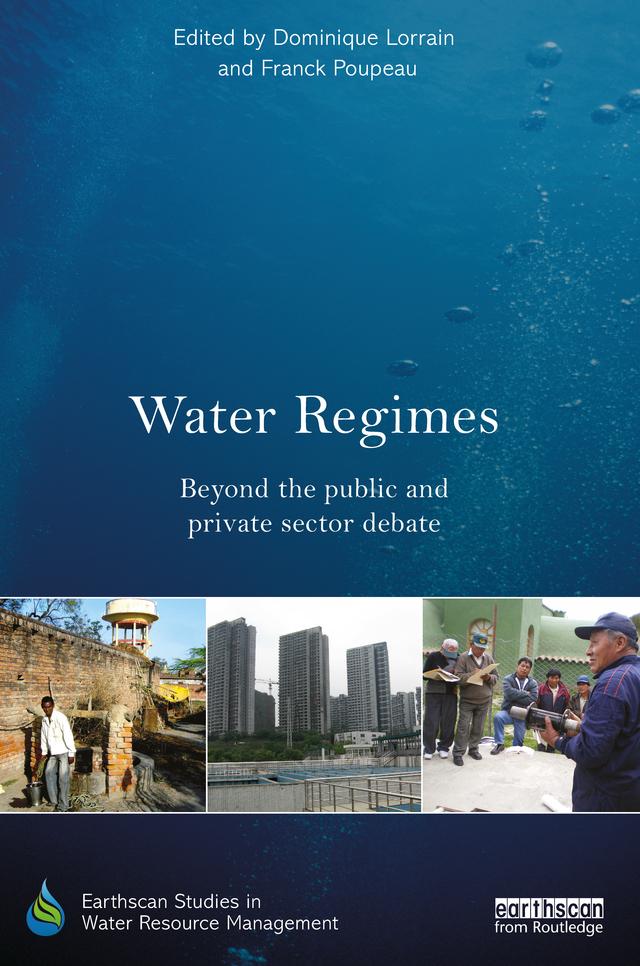
In recent years the water sector has undergone profound institutional, economic and political transformations. Some countries have encouraged privatization of water services, but in many cases this has provoked adverse reaction to such a neoliberal and market-based approach to this common shared but essential resource.
This book goes beyond the ideology of the public versus private water regime debate, by focusing on the results of these types of initiatives to provide better water services, particularly in urban settings. It provides numerous examples of alternative models, to show who is responsible for implementing such systems and what are their social, institutional and technical-scientific characteristics. Policies are analysed in terms of their implications for employees and residents.
The book presents a new combinatory approach of water regimes, based on several international case studies (Argentina, Bolivia, China, France, Germany, India, South Africa and the USA, plus a comparison of three cities in Africa) presenting specific challenges for water models. These case studies demonstrate the successes and problems of a range of private sector involvements in the provision of water services, and provide examples of how small-scale systems can compare with larger-scale more technical systems.
Zahle einfach mit Karte, Klarna, Apple Pay oder Google Pay. Nicht zufrieden? Du hast immer ein 14-tägiges Widerrufsrecht. Lies mehr in unseren AGB. Hast du Fragen, schreib uns eine E-Mail an hello@memmo.org.
Memmo macht das Lernen einfacher – wo auch immer du bist. Bei uns findest du deine Kursbücher und smarte Lerntools an einem Ort: Zusammenfassungen, Quizzes, Podcasts und Lernkarten. Und Ted, dein Lernbuddy, beantwortet alles, was du wissen möchtest. Über 50.000 Studierende lernen bereits hier – gemacht, damit du schneller lernst und weniger Stress hast.