
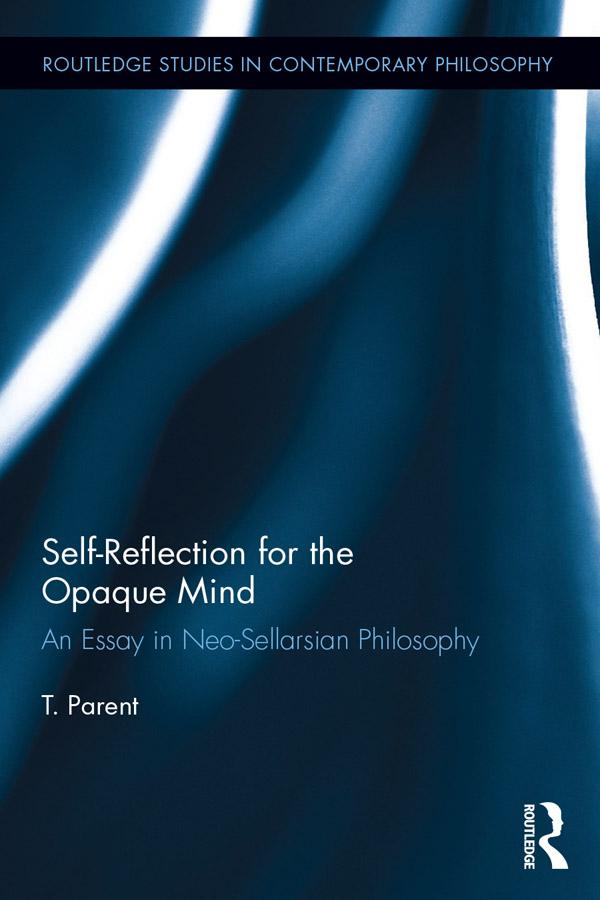
This volume attempts to solve a grave problem about critical self-reflection. The worry is that we critical thinkers are all in "epistemic bad faith" in light of what psychology tells us. After all, the research shows not merely that we are bad at detecting "ego-threatening" thoughts à la Freud. It also indicates that we are ignorant of even our ordinary thoughts—e.g., reasons for our moral judgments of others (Haidt 2001), and even mundane reasons for buying one pair of stockings over another! (Nisbett & Wilson 1977) However, reflection on one’s thoughts requires knowing what those thoughts are in the first place. So if ignorance is the norm, why attempt self-reflection? The activity would just display naivety about psychology. Yet while respecting all the data, this book argues that, remarkably, we are sometimes infallible in our self-discerning judgments. Even so, infallibility does not imply indubitability, and there is no Cartesian ambition to provide a "foundation" for empirical knowledge. The point is rather to explain how self-reflection as a rational activity is possible.
Zahle einfach mit Karte, Klarna, Apple Pay oder Google Pay. Nicht zufrieden? Du hast immer ein 14-tägiges Widerrufsrecht. Lies mehr in unseren AGB. Hast du Fragen, schreib uns eine E-Mail an hello@memmo.org.
Memmo macht das Lernen einfacher – wo auch immer du bist. Bei uns findest du deine Kursbücher und smarte Lerntools an einem Ort: Zusammenfassungen, Quizzes, Podcasts und Lernkarten. Und Ted, dein Lernbuddy, beantwortet alles, was du wissen möchtest. Über 50.000 Studierende lernen bereits hier – gemacht, damit du schneller lernst und weniger Stress hast.