
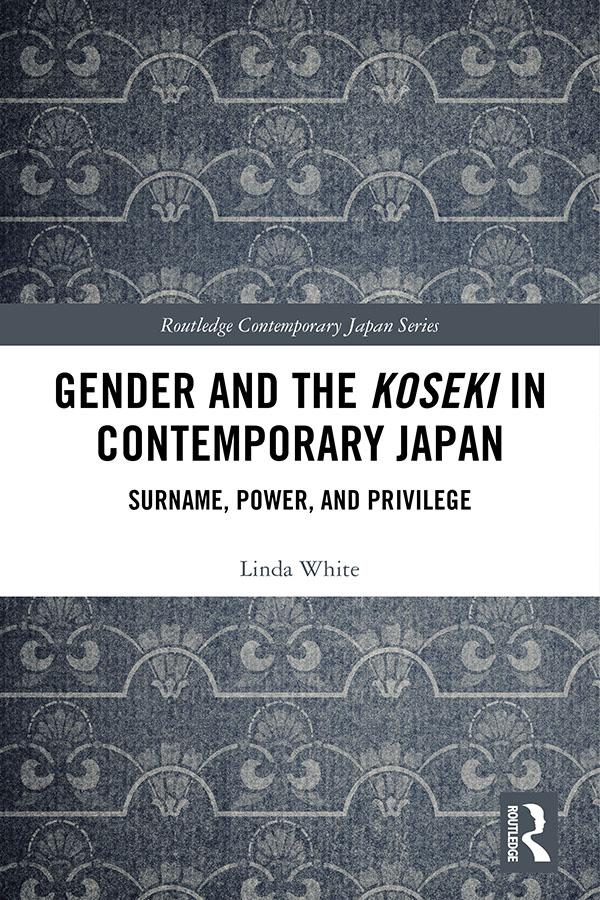
The Japanese koseki system is the legal and social structure keeping record of all Japanese citizens. Determined by the Civil Code and the Koseki Law, for activists challenging it, the koseki is also an ideological structure, which has produced patriarchal control through single-surname households.
Based on ethnographic fieldwork in Tokyo, this book engages with issues of gender hierarchy and structural inequality in Japanese society. Studying several decades of feminist activism and critique of the koseki system, it analyses the strategies of activists who have creatively circumvented koseki rules in order to maintain their natal names in marriage. It examines the case studies of members of the fūfubessei (separate surname movement) and the movement to end discrimination against children born out of wedlock, and in so doing this book illuminates the contradictions in current family law and koseki practice that have animated a generation of feminists in Japan.
Demonstrating the effect of the koeski on family, gender, and national identity, this book will be useful for students and scholars of Cultural Anthropology, Gender Studies, and Japanese Studies in general.
Zahle einfach mit Karte, Klarna, Apple Pay oder Google Pay. Nicht zufrieden? Du hast immer ein 14-tägiges Widerrufsrecht. Lies mehr in unseren AGB. Hast du Fragen, schreib uns eine E-Mail an hello@memmo.org.
Memmo macht das Lernen einfacher – wo auch immer du bist. Bei uns findest du deine Kursbücher und smarte Lerntools an einem Ort: Zusammenfassungen, Quizzes, Podcasts und Lernkarten. Und Ted, dein Lernbuddy, beantwortet alles, was du wissen möchtest. Über 50.000 Studierende lernen bereits hier – gemacht, damit du schneller lernst und weniger Stress hast.