
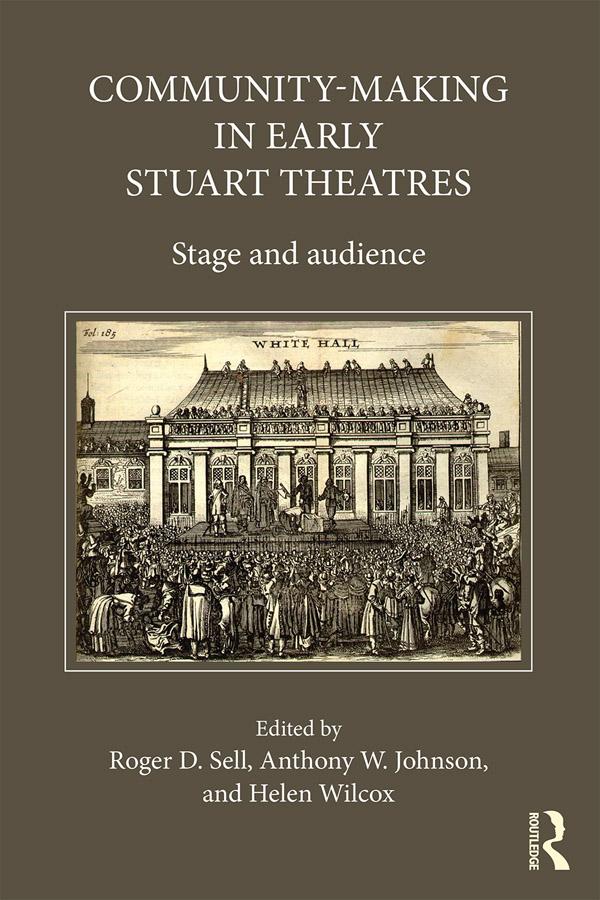
Twenty-two leading experts on early modern drama collaborate in this volume
to explore three closely interconnected research questions. To what extent did
playwrights represent dramatis personae in their entertainments as forming, or
failing to form, communal groupings? How far were theatrical productions likely
to weld, or separate, different communal groupings within their target audiences?
And how might such bondings or oppositions among spectators have tallied with
the community-making or -breaking on stage? Chapters in Part One respond to
one or more of these questions by reassessing general period trends in censorship,
theatre attendance, forms of patronage, playwrights’ professional and linguistic
networks, their use of music, and their handling of ethical controversies.
In Part Two, responses arise from detailed re-examinations of particular plays
by Shakespeare, Chapman, Jonson, Beaumont and Fletcher, Cary, Webster, Middleton,
Massinger, Ford, and Shirley. Both Parts cover a full range of early-Stuart
theatre settings, from the public and popular to the more private circumstances
of hall playhouses, court masques, women’s drama, country-house theatricals,
and school plays. And one overall finding is that, although playwrights frequently
staged or alluded to communal conflict, they seldom exacerbated such divisiveness
within their audience. Rather, they tended toward more tactful modes of
address (sometimes even acknowledging their own ideological uncertainties) so
that, at least for the duration of a play, their audiences could be a community
within which internal rifts were openly brought into dialogue.
Zahle einfach mit Karte, Klarna, Apple Pay oder Google Pay. Nicht zufrieden? Du hast immer ein 14-tägiges Widerrufsrecht. Lies mehr in unseren AGB. Hast du Fragen, schreib uns eine E-Mail an hello@memmo.org.
Memmo macht das Lernen einfacher – wo auch immer du bist. Bei uns findest du deine Kursbücher und smarte Lerntools an einem Ort: Zusammenfassungen, Quizzes, Podcasts und Lernkarten. Und Ted, dein Lernbuddy, beantwortet alles, was du wissen möchtest. Über 50.000 Studierende lernen bereits hier – gemacht, damit du schneller lernst und weniger Stress hast.