
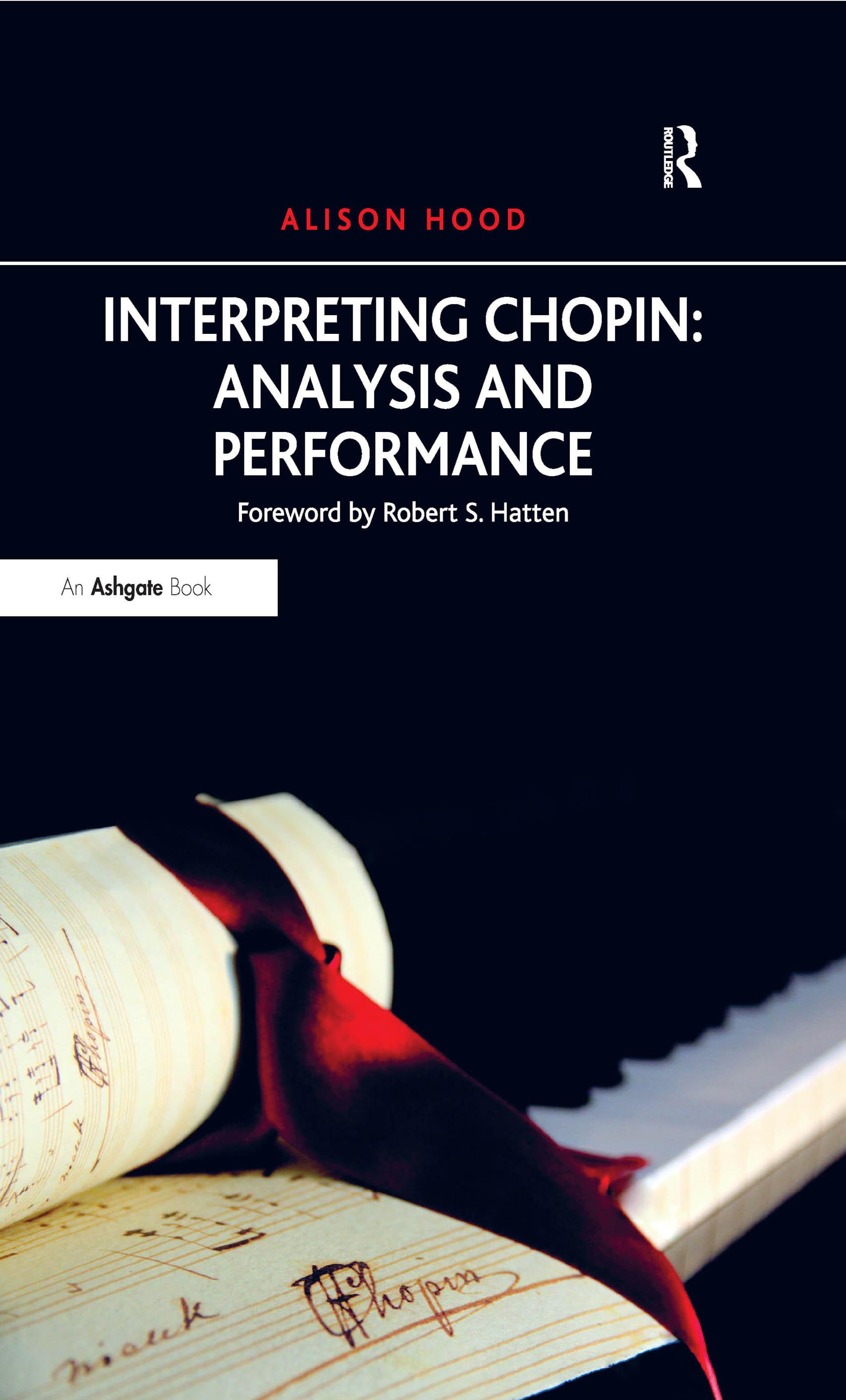
Music theory is often seen as independent from - even antithetical to - performance. While music theory is an intellectual enterprise, performance requires an intuitive response to the music. But this binary opposition is a false one, which serves neither the theorist nor the performer. In Interpreting Chopin Alison Hood brings her experience as a performer to bear on contemporary analytical models. She combines significant aspects of current analytical approaches and applies that unique synthetic method to selected works by Chopin, casting new light on the composer’s preludes, nocturnes and barcarolle. An extension of Schenkerian analysis, the specific combination of five aspects distinguishes Hood’s method from previous analytical approaches. These five methods are: attention to the rhythms created by pitch events on all structural levels; a detailed accounting of the musical surface; 'strict use' of analytical notation, following guidelines offered by Steve Larson; a continual concern with what have been called 'strategies' or 'premises'; and an exploration of how recorded performances might be viewed in terms of analytical decisions, or might even shape those decisions. Building on the work of such authors as William Rothstein, Carl Schachter and John Rink, Hood’s approach to Chopin’s oeuvre raises interpretive questions of central interest to performers.
Zahle einfach mit Karte, Klarna, Apple Pay oder Google Pay. Nicht zufrieden? Du hast immer ein 14-tägiges Widerrufsrecht. Lies mehr in unseren AGB. Hast du Fragen, schreib uns eine E-Mail an hello@memmo.org.
Memmo macht das Lernen einfacher – wo auch immer du bist. Bei uns findest du deine Kursbücher und smarte Lerntools an einem Ort: Zusammenfassungen, Quizzes, Podcasts und Lernkarten. Und Ted, dein Lernbuddy, beantwortet alles, was du wissen möchtest. Über 50.000 Studierende lernen bereits hier – gemacht, damit du schneller lernst und weniger Stress hast.
Das könnte dir auch gefallen
Buch kaufen0