
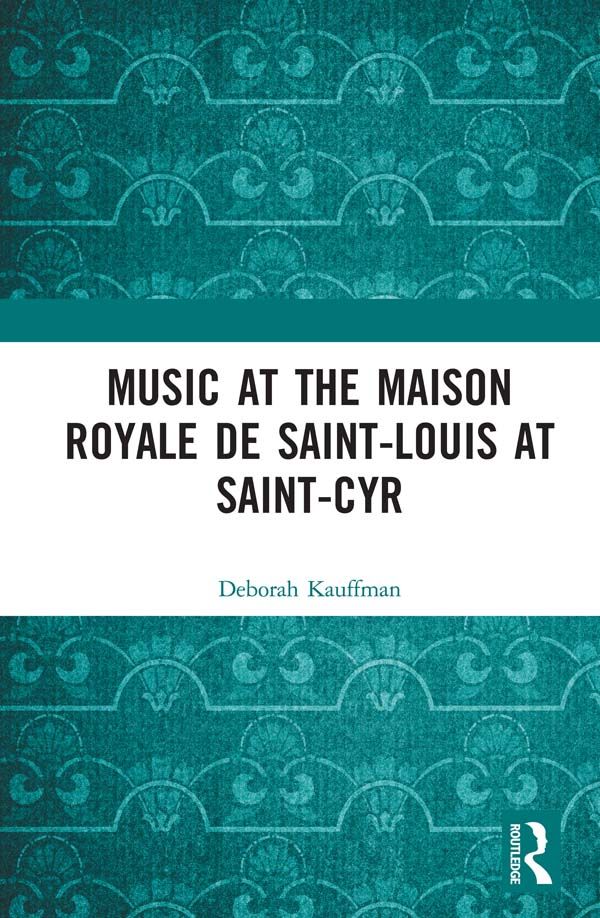
The history of music at the Maison royale de Saint-Louis at Saint-Cyr — the famous convent school founded by Madame de Maintenon and established by Louis XIV in 1686 as a royal foundation — is both rich and intriguing; its large repertory of music was composed expressly for young female voices by important composers working within significant contemporary musical genres: liturgical chant, sacred motets, theatrical music, and cantiques spirituels. While these genres reflect contemporary styles and trends, at the same time the works themselves were made to conform to the sensibilities and abilities of their intended performers. Even as Jean-Baptiste Moreau's music for Jean Racine’s biblical tragedies Esther and Athalie shows a number of similarities to contemporary tragédies lyriques, it departs from that more public genre in its brevity, generally simpler solo writing, and the integral use of the chorus. The musical style of the choral numbers closely parallels that of other choral music in the repertory at Saint-Cyr. The liturgical chant sung in the church was composed by Guillaume-Gabriel Nivers, and is an example of plain-chant musical, a type of new ecclesiastical composition written during the seventeenth and eighteenth centuries, primarily for female religious communities in France. The large repertory of petits motets (short sacred Latin pieces for solo voice), mostly composed by Nivers and Louis-Nicolas Clérambault, are simpler and more restrained than works by their contemporaries. A close study of the motets reveals much about changes to musical style and performance practices at Saint-Cyr during the eighteenth century. The cantique spirituel, a song with a spiritual text in the vernacular French language, played a significant role in both the education and recreation of the girls at Saint-Cyr. Cantiques composed for the girls vary widely in terms of their style and difficulty, ranging from simple strophic melodies to more sophisticated works in the style of contemporary airs. In all cases, the stylistic features of the music for Saint-Cyr reflect a careful consideration of the needs and capabilities of the young singers of the school, as well as an awareness of the rigorous requirements of Madame de Maintenon, who kept a close watch over the propriety of all things relating to the piety, behavior, and image of her charges.
Zahle einfach mit Karte, Klarna, Apple Pay oder Google Pay. Nicht zufrieden? Du hast immer ein 14-tägiges Widerrufsrecht. Lies mehr in unseren AGB. Hast du Fragen, schreib uns eine E-Mail an hello@memmo.org.
Memmo macht das Lernen einfacher – wo auch immer du bist. Bei uns findest du deine Kursbücher und smarte Lerntools an einem Ort: Zusammenfassungen, Quizzes, Podcasts und Lernkarten. Und Ted, dein Lernbuddy, beantwortet alles, was du wissen möchtest. Über 50.000 Studierende lernen bereits hier – gemacht, damit du schneller lernst und weniger Stress hast.